



THE NATIONAL CENTER FOR SUBURBAN STUDIES AT HOFSTRA UNIVERSITY
Student Research Showcase
The National Center for Suburban Studies supports student-led, interdisciplinary research at Hofstra University, including projects in environmental science and medical education. Below are selected students and their work.
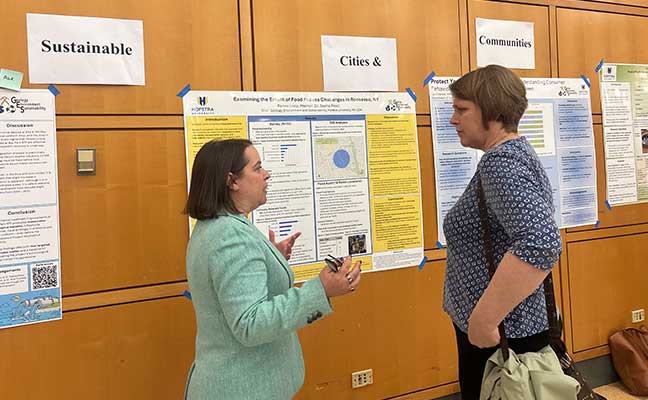
Examining the Extent of Food Access Challenges in Roosevelt, NY
Renee Lista
Renee Lista investigated food access challenges in Roosevelt, NY by conducting a food audit of 18 retail locations and surveying residents about the availability, accessibility, affordability, and cultural relevance of healthy foods. Combining survey data with GIS analysis, the project identified barriers related to transportation, healthy food availability, and affordability, while highlighting the important role of food pantries in supporting community food security.
Renee received an Honorable Mention for the Provost Research Award at Hofstra’s Graduate Research Day (May 6, 2026). She also presented this research at the 2026 Agriculture, Food, and Human Values Society/Association for the Study of Food and Society (AFHVS/ASFS) Annual Conference at the University of Vermont in Burlington, Vermont.
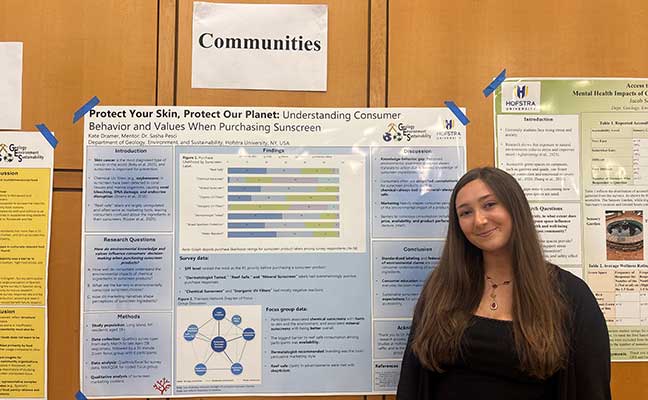
Protect Your Skin, Protect Our Planet: Understanding Consumer Behavior and Values When Purchasing Sunscreen
Kate Dramer
Kate Dramer examined how environmental knowledge and values influence sunscreen purchasing decisions among Long Island consumers. Through a survey of Nassau and Suffolk County residents and a follow-up focus group, the project explored perceptions of sunscreen ingredients, environmental marketing claims, and “reef-safe” labeling. The research found that while many consumers express concern about environmental impacts, purchasing decisions are also shaped by product availability, cost, performance, and marketing, underscoring the need for clearer labeling and consumer education.
Supported by the National Center for Suburban Studies (NCSS), which advances student research in the Biology Department through the Sustainability Institute, this project focused on tracking environmental indicators of wastewater in local ecosystems.
Samir Patel and Shiloah Lewis developed a method to measure artificial sweeteners and related compounds as markers of municipal wastewater in Long Island’s receiving waters, contributing to efforts to monitor and protect environmental health.
Patel (2025 Summer Fellowship recipient) and Lewis (2026 Summer Fellowship recipient) conducted their research at the Long Island Native Habitat Conservancy under the mentorship of Dr. Kevin Bisceglia of Hofstra’s Department of Chemistry. They presented their findings at the Long Island Natural History Conference on February 27, 2026.
Project Images:
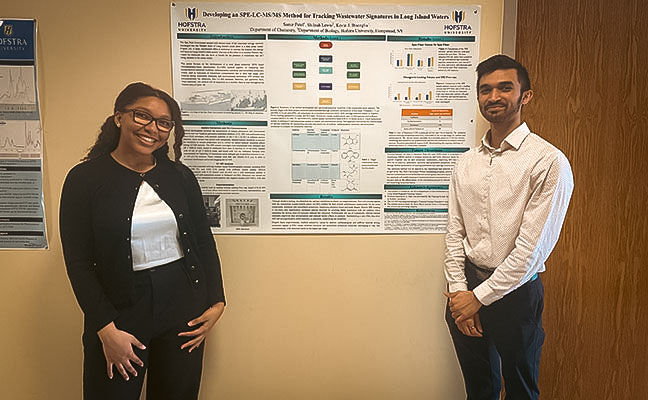
Students presenting research at the Long Island Natural History Conference
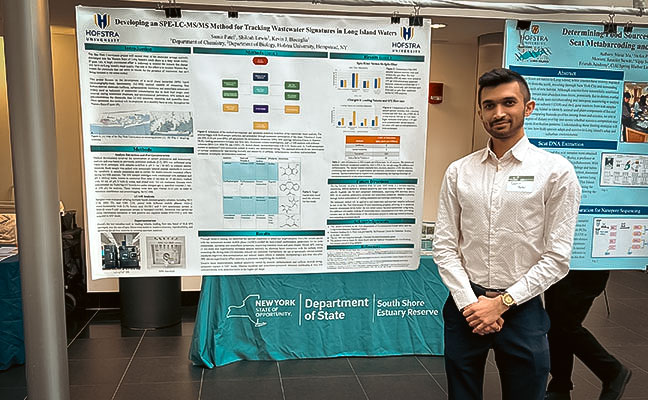
Samir Patel at the Long Island Native Habitat Conservancy (LINHC)
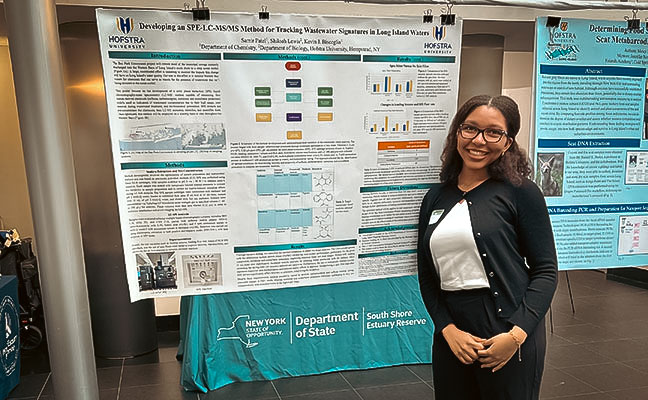
Shiloah Lewis at the Long Island Native Habitat Conservancy (LINHC)
Student research presented during Medical Student Research Week is supported by the Center’s Foundation for Innovations in Medical Education.
At the Zucker School of Medicine at Hofstra/Northwell, second-year medical students complete mentored research during the summer between their first and second years, collaborating with faculty and researchers at Northwell Health, Cold Spring Harbor Laboratory, and the Feinstein Institutes for Medical Research. These projects are a core component of the curriculum and allow students to explore individual research interests.
Presented annually during Medical Student Research Week, student work spans a wide range of topics, including maternal health education, care for patients with developmental disabilities, clinical trial participation among diverse populations, and lifestyle interventions to improve outcomes for aging adults with chronic disease.
Student Research Posters:
Freda Hasselbring Poster
Kianna Rojas Poster
Ethan Royka Poster
Nneka Ulu Poster
This work was supported by NCSS and made possible through generous funding from Robert Catell.
Hillary Flurkey’s research project sought to understand suburban residents’ attitudes toward public transportation, specifically examining how residents of Northport and East Northport feel about expanding the current public transportation system.
Trevor Johnson’s research project examined the extent to which Hofstra students’ awareness of the environmental impacts of meat production influenced their meat consumption choices.
Benjamin Cortez’s research focuses on analyzing how YouTube users respond to different ways of communicating environmental information in order to understand which framing styles increase engagement and are most effective.

Hofstra’s academic programs empower you to think beyond the classroom and turn knowledge into action. Find the right program for your goals and shape your future with us.