




DEPARTMENT OF
About the Department
The Department of Biology provides a comprehensive, high-quality education that fosters independence in the application of scientific knowledge and the scientific method. The redesigned curriculum integrates interactive learning and research opportunities to give you the skills and experience to pursue advanced study or work at renowned institutions.
Faculty
Biology students learn from faculty who are active researchers and frequent contributors to scholarly journals. Each faculty member offers students opportunities to work alongside them in their specific areas of research, fostering close mentorship in classrooms, laboratories, and field settings while building the skills needed for graduate study and scientific careers.
Facilities & Equipment
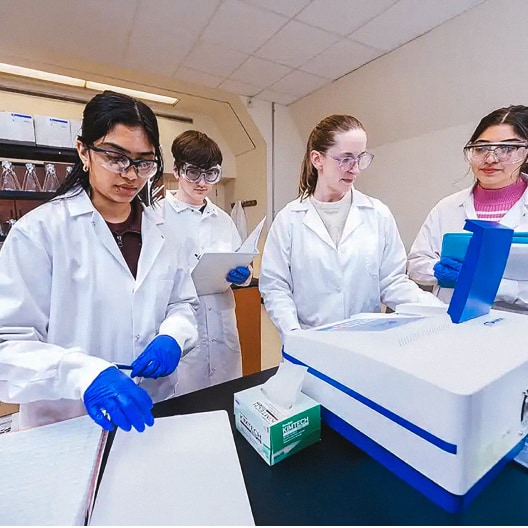
Students in the Biology Department have access to exceptional facilities and equipment ranging from the Collaboratorium to the Cell Biology Research Lab. Equipment includes electron scanning microscopes, fluorescent microscopes, elemental analyzers, a bioreactor, and a robotic liquid handler.
Learn About FacilitiesThe Student Experience
In our department, you’ll have access to the resources and opportunities you’ll need to enhance and extend your education.
Programs Abroad
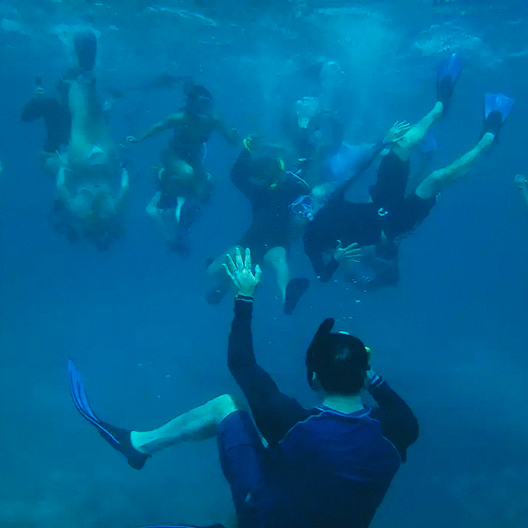
Biology students can participate in an immersive study abroad program that explores evolution, ecology, geology, and conservation in the Galápagos Islands. Through fieldwork, site visits, and daily excursions, students study iconic species, volcanic landscapes, and current conservation challenges such as tourism and invasive species. The program runs every other year and alternates with a similarly hands-on study abroad experience in Belize.
Galápagos Islands BelizeDegrees & Programs
The most popular undergraduate program is the Bachelor of Science in Biology. Within this degree, students who have predetermined interests and career goals can choose among the following specialized study tracks: cell and molecular biology; ecology and evolution; marine biology; pre-medical, pre-dental, and pre-veterinary studies; and secondary education. The department also offers BS degrees in pre-medical studies, neuroscience, and urban ecology, as well as BA degrees and minors.
UNDERGRADUATE DEGREES & PROGRAMS
BA in Biology BS in Biology BS in Pre-medical Studies BS in Neuroscience Minor in Biology Minor in NeuroscienceDUAL-DEGREE PROGRAMS
Biology (BS) and Biology (MS) Dual-degree Program Urban Ecology (BA) and Urban Ecology (MA) Dual-degree Program Urban Ecology (BS) and Urban Ecology (MS) Dual-degree ProgramGRADUATE DEGREES & PROGRAMS
MA in Biology MS in Biology MA in Urban Ecology MS in Urban EcologyPre-Dental and Pre-Vet Programs
Early Assurance Admission Program to Rutgers School of Dental Medicine (RSDM) Preferential Admission Program to Long Island University College of Veterinary Medicine (LIU-CVM)
Careers
Alumni of the Biology program move on to attend professional medical schools to attain advanced degrees such as Medicine (MD/DO); Veterinarian medicine (DVM); Dentistry (DDS); Optometry or attend Graduate school (MS/PhD). Others pursue careers in Public Health; Biotechnology; Research; Education; Environmental Management; Conservation Policy; Law; Business; and Technical Writing
Contact Us
DEPARTMENT SECRETARY
Wait lists, lab manuals, scheduling
Biology Department,
Room 130 Gittleson
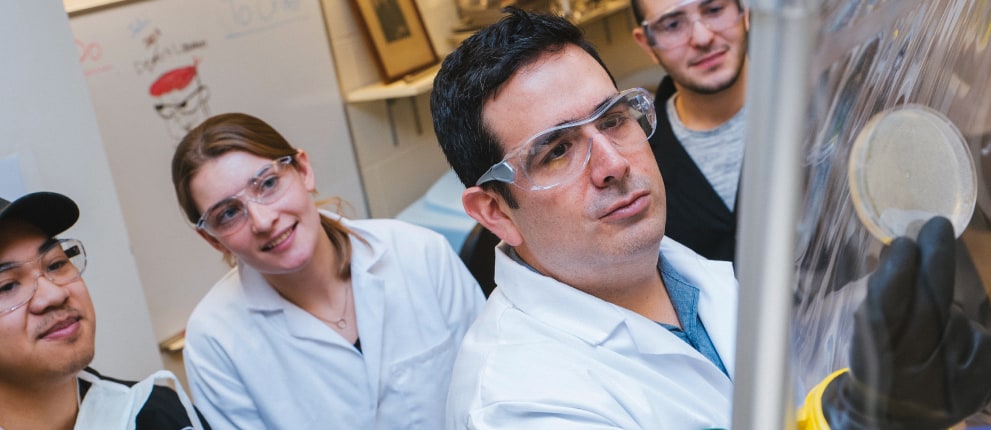
Investigate the complexities of life through hands-on research, innovative labs, and field experiences that spark breakthroughs.