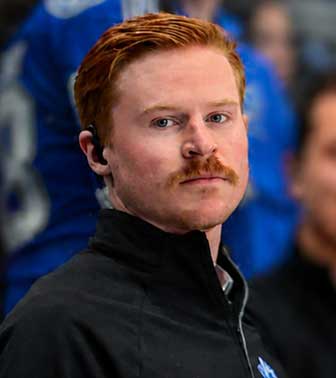
Tyler McGivney
Why did you choose a graduate program at Hofstra?
Having graduated from Hofstra in 2024 with a degree in Exercise Physiology and a minor in Pre-Athletic Training Studies, continuing into the Master of Athletic Training program felt like a natural next step. Having already built relationships with the faculty and experienced the athletic environment at Hofstra, I felt confident that I would be supported while being challenged to grow into the Athletic Trainer I wanted to become.
Describe your experience working with faculty in the Athletic Training department.
One of the biggest strengths of the program was the relationships I was able to build with the faculty. The faculty members genuinely cared about my development as a student and future Athletic Trainer, and they were always willing to make time for questions, provide feedback, and help me work through challenges. Because the program is close-knit, I never felt like I was just another student in a classroom, it felt like a family. The faculty got to know me personally and professionally, and they challenged me to continue improving while also supporting me throughout the program. Those relationships were an important part of my experience at Hofstra and are something I will carry with me into my career.
How did your graduate program prepare you for employment as an Athletic Trainer?
The MSAT program prepared me for employment by giving me a strong foundation in both the knowledge and practical skills needed to work as an Athletic Trainer. The combination of classroom learning, and hands-on clinical experiences allowed me to take what I learned and immediately apply it in real-world settings. Through my clinical rotations, I was able to work with different sports, athletes, coaches, and healthcare professionals. That experience helped me become more confident making clinical decisions, communicating with athletes and coaches, managing injuries, and handling the responsibilities that come with being an Athletic Trainer. By the time I graduated, I felt prepared not only to treat injuries, but also to step into the day-to-day responsibilities of anything thrown my way.
What advice do you have for students looking to enter the Athletic Training program?
My biggest piece of advice is to take advantage of every opportunity the program gives you. You never know who you might meet or what opportunities can arise from them. Athletic Training is a hands-on profession, so don’t be afraid to ask questions, get involved, and learn from every clinical experience, even when you are outside of your comfort zone.
I would also encourage students to build relationships with their classmates, faculty, preceptors, and other healthcare professionals. The people you meet throughout the program can have a huge impact on your education and your career. Most importantly, be willing to learn from your mistakes and use them as opportunities to improve. You don’t have to know everything when you enter the program, the goal is to leave the program prepared to continue learning throughout your career.