


Humanity, the Humanities, and Humanitarianism
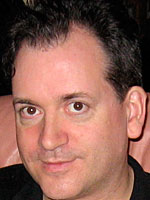
Simon Doubleday (Department of History)
Paul Farmer, as his biographer points out in Mountains Beyond Mountains, is fond of alliterative titles: AIDS and Accusation; Infections and Inequalities; Pathologies of Power. In this short piece, I’d like to raise a few questions about 3 H’s, and the relationship between them – humanity, the humanities, and humanitarianism. As you read Tracy Kidder’s book, you might also ask about how these issues matter as you enter the world of a fourth H: Hofstra.
Who are we? What place do we have, and should we have, in the world? These are issues that we often confront, and they are questions that strike the young doctor, Paul Farmer, insistently. In the Haitian town of Léogane, he listens to another doctor say that he’s leaving to go back to New Orleans: “I’m an American, and I’m going home,” says his colleague. But are we most fundamentally defined by our national identity, or by something deeper? After a young pregnant woman dies, at the hospital where he’s working, Farmer’s moment of epiphany comes, hearing the Kreyol words tout moun se moun. ‘We are all human’.
The profound conviction that we should live our lives according to our common humanity drives Farmer in his ever-greater commitment to the poorest of the poor, in Haiti and beyond. If this revelation – the fact that we are all human -- seems to be self-evident, how can it shape our approach to education? The ‘humanities’ (a range of subjects that sometimes includes my own subject, history) have been a fundamental feature of university education since the Renaissance. But people have often studied the humanities with an eye to individual happiness and self-improvement, rather than social justice: in this sense, they have not always been very humane.
As Farmer repeatedly insists, we need something more than education: we need transformation. Knowledge and action have to be combined. For example, it may be ‘interesting’ to learn that the successful US revolution in 1776 was made possible in part because of the money received from the Caribbean colony of St. Domingue, which would soon experience its own revolution and become renamed ‘Haiti’. But is that knowledge valuable? Only if it changes our perception of Haiti as a hopelessly dependent country, and encourages us to repay our many historic debts.
Mountains Beyond Mountains was written almost a decade ago, well before the earthquake of January 2010, which killed perhaps 250,000 people. The situation in Haiti is now far worse, and the need for action is even more intense. Many more millions of Haitians are homeless, penniless, and traumatized. If there was ever a need for humanitarian action, it is now. In the months after the earthquake, many Hofstra students and faculty gathered together to form an alliance called “Hofstra for Haiti”.
Some of them have become active in helping efforts to rebuild a school in Port-au-Prince, in collaboration with the Edeyo Foundation. How best to unite the practical and the ethical? By building a school, Farmer says: “a school could serve as a place for teaching lessons about health care and for providing free meals to malnourished children without injuring their dignity” (91).
Some people see the university as a place that should be free of the pressures of the world: an island of learning, a place of retreat. But in Haiti, Paul Farmer wonders ‘obsessively’ about why his academic field, anthropology, really matters. “I’m an action kind of guy,” he explains to Kidder (79). He comes to be much less interested in anthropology in itself than ‘as a tool for what he called “intervention”’ (83). The notion that scholarship should inspire action is increasingly common even in fields seemingly far removed from the present: I have just finished working on a book called Why the Middle Ages Matter: Medieval Light on Modern Injustice. Academic knowledge ‘for its own sake’ is not enough. Paul Farmer is a good example of how much can be achieved when knowledge is harnessed for the good of humanity, and generates real-world humanitarian action. Far better, then, to place the university at the service of society; the question that really matters is how. Whether you choose to apply them in a desperate country such as Haiti or a needy community much closer to Hofstra – perhaps even in Hempstead – you will soon be developing new intellectual skills that you, like Paul Farmer, can transform into action.
Medical Altruism: Dr. Samuel Packer discusses Mountains Beyond Mountains
Society, Science and Natural Hazards: Christa Farmer, assistant professor of geology at Hofstra University, discusses Mountains Beyond Mountains
Distance and Moral Obligation: Christopher Eliot, assistant professor of philosophy, offers his perspective on the Common Reading book Mountains Beyond Mountains