




UNDERGRADUATE PROGRAMS IN
Why Study Music
Do you dream of making a living as a singer or instrumentalist? At Hofstra, the classical music performance program helps you turn talent into artistry and ambition into a career. You’ll study music theory, history, and expression while receiving focused training in your instrument or voice through private lessons, major ensembles, chamber groups, and milestone recitals that showcase your growth as a performer.
Just a short train ride from New York City, you’ll have access to world-class concerts, operas, and productions, as well as having opportunities to network with professionals across the classical music world. You’ll graduate with the technique, experience, and artistic perspective needed to navigate the competitive landscape of classical performance.
Schedule Your Audition
Take the next step toward becoming a professional performer. Request your audition packet and reserve your time to showcase your talent.
Book nowDegrees & Programs
Hofstra’s curriculum is centered on music theory, history, and expression, providing a solid foundation for a career in the art of music. The program focuses on a core of substantial training and experience in your chosen performance medium, including lessons, participation in major ensembles, focused work in chamber ensembles, and a junior half and a senior full recital.
Hofstra’s campus — an easy train ride to New York City — gives students countless opportunities to attend concerts, operas, and Broadway shows and experience various other productions while networking with industry professionals.
More About the Program
All students wishing to declare a BS or BSEd in Music in any concentration (music performance, music business, music education, music theory/composition, jazz and commercial music, or music history/literature) must audition for acceptance into these programs. Reserve Your Audition Spot Today
Career Path & Outcomes
Hofstra music majors graduate with classroom instruction and professional experiences that are highly regarded in today’s competitive job market.
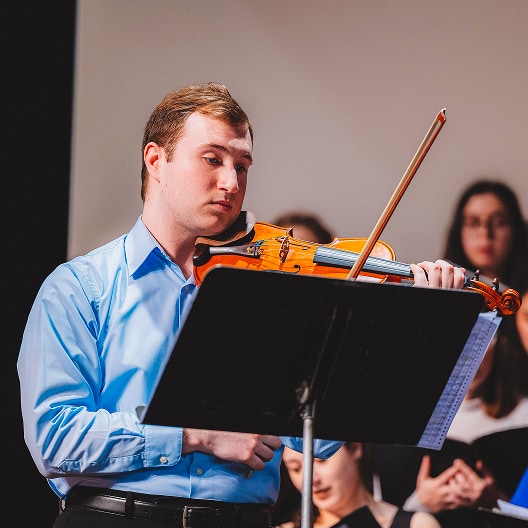
Graduates are working for performance venues, record labels, and recording studios and are employed in several areas of the music industry, including:
- Education
- Marketing and public relations
- Music management
- Music publishing
- Sound engineering
Many graduates are also pursuing or planning to pursue advanced degrees in music and music education at institutions such as:
- Brooklyn College
- Georgia State University
- Hebrew College
- Hofstra University
- Queens College
- Roosevelt University
- Vermont College of Fine Arts
89%
Graduates who were employed or pursuing graduate studies within a year after graduating
92%
Employed graduates who secured a position within six months after graduating
$50K
Average first-year annual salary after graduating
Train. Perform. Belong.
Related Subjects
Contact Us
Coordinator, Music Performance
Adam Glaser
Assistant Professor of Music and Director of Orchestras
Room 111 Joseph G.
Shapiro Family Hall