Image
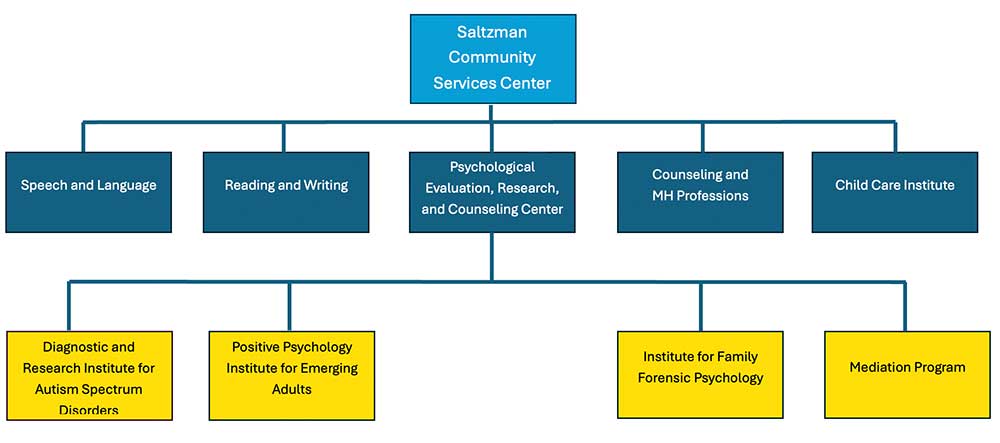


At Hofstra University, our Psy.D. Program in School–Community Psychology extends far beyond the classroom. Our training clinics and institutes provide doctoral students with immersive, hands-on experience at the intersection of psychology, education, law, and community service. Each institute reflects our shared mission: to apply science, compassion, and creativity to real-world problems — and to prepare practitioners who make a measurable difference in people’s lives.
The Institute for Family Forensic Psychology (IFFP) is a nationally recognized training and service clinic committed to helping families recover, rebuild, and thrive following trauma, abuse, neglect, or chronic conflict. The Institute serves as a cornerstone of Hofstra’s mission to integrate psychological science, legal systems, and compassionate clinical care.
The IFFP maintains active partnerships with the Nassau County Family Treatment Court (“Drug Court”) and the Nassau County P.E.A.C.E. Program (Parent Education and Custody Effectiveness), providing trauma-informed services and evidence-based interventions for families involved in court proceedings related to child protection, custody, or reunification.
Our mission is to promote healing, accountability, and resilience through forensic assessment, therapy, and psychoeducational programming. We strive to transform conflict into collaboration and to foster environments where children can once again feel safe, seen, and supported.
Family transitions such as divorce, separation, or the aftermath of child protective involvement can be profoundly destabilizing for children. The IFFP offers a full spectrum of services designed to restore stability and foster growth:
The IFFP continues to design and evaluate innovative models that bridge research and real-world family needs. Current and emerging programs include:
Through our partnership with the Parent Education and Custody Effectiveness (P.E.A.C.E.) Program, the IFFP provides court-connected education designed to reduce conflict, enhance communication, and promote cooperative parenting.
Doctoral students in the Psy.D. Program serve as presenters, facilitators, and researchers within the P.E.A.C.E. Program. Under expert faculty supervision, students deliver psychoeducational modules, lead breakout discussions, and evaluate participant outcomes — translating psychological principles into direct public service.
The IFFP’s work extends well beyond Long Island. Doctoral students and faculty frequently present research and training innovations at international conferences, sharing their findings and best practices in Prague, Lyon, Rome, Barcelona, Montreal, and other global venues. Their presentations highlight Hofstra’s pioneering work in forensic intervention, trauma-informed care, parent–child reunification, and resilience-based programming.
The Positive Psychology Institute for Emerging Adults is dedicated to helping young adults build lives filled with meaning, purpose, and joy. Rooted in the science of well-being, the Institute moves beyond the traditional model of symptom reduction to focus on human flourishing—teaching individuals not only how to cope, but how to thrive.
Housed within the Joan and Arnold Saltzman Community Services Center, the Institute serves as a transformative learning environment for Hofstra’s Psy.D. students, who train in evidence-based interventions that promote optimism, resilience, and engagement during one of life’s most complex developmental transitions—the passage from adolescence to adulthood.
Our mission is to empower emerging adults to design and live the best life possible—one that integrates emotional well-being, authentic relationships, personal values, and social contribution. We approach psychological growth from a strengths-based, solution-focused, and culturally responsive lens, emphasizing not what is wrong, but what is strong. Our philosophy is grounded in the core pillars of positive psychology:
These five pillars (known collectively as PERMA) along with other facets of cognitive-behavior therapy guide every aspect of the Institute’s clinical and educational mission.
The Institute offers a range of innovative services for young adults navigating the unique challenges of higher education, early careers, identity development, and independence:
Doctoral students working within the Institute receive intensive supervision in strength-based assessment, motivational interviewing, well-being science, and resilience-building interventions. Training emphasizes not only helping individuals reduce distress, but teaching clients to build psychological capital—hope, efficacy, optimism, and perseverance.
Students collaborate on research projects examining the impact of positive psychology interventions on well-being, academic performance, and social connectedness among emerging adults. Ongoing studies explore:
The Positive Psychology Institute extends its mission beyond campus through community partnerships, workshops, and professional training events for schools, agencies, and corporate organizations. Recent programs have included:
The Institute for Emerging Adults is not simply a clinic—it is a community of possibility. Every session, workshop, and research project is designed to help young adults identify their strengths, clarify their purpose, and live with passion and authenticity. Doctoral students who train in the Institute gain advanced competencies in strength-based intervention, resilience science, and applied positive psychology—skills increasingly sought in schools, universities, and mental health settings worldwide.
As one of Hofstra’s most forward-looking training sites, the Positive Psychology Institute embodies the belief that psychology is not only about alleviating suffering, but about awakening potential.
Learn more: https://www.hofstra.edu/saltzman-center/positive-psychology-emerging-adults.html
The Diagnostic and Research Institute for Autism Spectrum Disorders (ASD) is a vibrant center for assessment, treatment, and innovation dedicated to supporting individuals with autism and their families. Housed within Hofstra’s Joan and Arnold Saltzman Community Services Center, the Institute serves as both a state-of-the-art clinical facility and a training and research site for doctoral students in the School–Community Psychology Psy.D. Program.
At the heart of the Institute lies a simple, unwavering belief: every person with autism deserves to be understood, supported, and celebrated. Our mission is to provide evidence-based, developmentally attuned, and deeply compassionate care that enhances communication, social connection, and adaptive functioning across the lifespan.
We operate from a strengths-based, neurodiversity-affirming perspective, helping individuals and families build resilience and confidence while honoring the unique ways each person learns and relates to the world. By integrating science, empathy, and advocacy, we strive to turn insight into impact—for clients, families, schools, and communities.
The ASD Institute offers a full continuum of diagnostic and therapeutic services tailored to meet the needs of toddlers, children, adolescents, and adults.
Our evaluation process is thorough, collaborative, and personalized. Using gold-standard tools such as the ADOS-2 and ADI-R, we assess social communication, sensory processing, cognitive development, and emotional well-being. Each evaluation culminates in actionable feedback that empowers families, schools, and service providers to make informed decisions.
We specialize in:
Our interventions are designed to promote growth, connection, and confidence:
Social connection is at the heart of our work:
The ASD Institute is also a hub of research and professional development, advancing the field of autism care through inquiry and innovation. Faculty and students collaborate on studies examining:
Doctoral students receive intensive supervision in assessment, intervention, consultation, and data-based practice, developing the advanced competencies required for work in schools, clinics, and interdisciplinary teams. Many present their findings at national and international conferences and contribute to publications that shape the field.
The Institute’s work extends well beyond campus. We collaborate with local schools, hospitals, and advocacy organizations to increase awareness and accessibility of autism services. Through community presentations, parent education workshops, and professional trainings, we promote inclusion, acceptance, and policy advancement for individuals on the spectrum.
Our outreach embodies Hofstra’s core values of service, scholarship, and social justice—helping communities become more understanding, responsive, and inclusive.
The Diagnostic and Research Institute for Autism Spectrum Disorders is more than a clinic—it’s a community of learning, healing, and discovery. Every day, our team witnesses growth: a child finding their voice, a teen mastering self-advocacy, a parent rediscovering hope.
By integrating science with humanity, the ASD Institute helps families write new stories of connection and potential—reminding us that with the right supports, every individual can thrive.
Learn more at the Diagnostic and Research Institute for Autism Spectrum Disorders (ASD) website.
Each of these Specialty Clinics embodies the Psy.D. Program’s central mission: to train psychologists who think systemically, act compassionately, and engage communities in meaningful change. Join a community of scholars, advocates, and innovators who are redefining the role of psychology in schools, courts, and communities — at the PsyD Program in School-Community Psychology at Hofstra University.