

As of fall 2026, the Greek and Roman Studies program will no longer be accepting new BA majors. Students may still minor in Greek and Roman Studies. Please contact the department chairperson at John.J.Krapp@Hofstra.edu for additional information.
The classical tradition is not trapped in dusty old books on library shelves; it exists in the way we speak, the way we think, what we read, the music we listen to, and what we watch on television and in movies. From democracy to gender, from theater to athletics, from philosophy to the very way in which we understand history – the legacy of the ancient Greek and Roman worlds lives all around us.
The Greek and Roman Studies program will introduce you to authors, texts, and ideas that constitute the foundational literature of the Western tradition. As we become increasingly globalized, you will benefit from learning to read, critique, and analyze ancient Greek and Roman literature.
Why Greek and Roman Studies?
Hofstra’s program in the Greek and Roman Studies offers language training in ancient Greek and Latin at all levels. By the third semester students are prepared to read and analyze Greek and Latin texts like Virgil's Aeneid and Plato's Symposium in their original language.
Our proximity to New York City allows students to enrich their classroom training with visits to the Greek and Roman wing at the Metropolitan Museum of Art, the neo-classical collection at the Dahesh Museum of Art, and the city's classically oriented exhibitions, theatrical offerings, and cultural events.

Degrees & Programs
The Greek and Roman Studies curriculum emphasizes training in Latin and/or ancient Greek. Greek and Roman Studies majors acquire powerful linguistic abilities by studying Latin and Greek and learning about the world through ancient literature. This program provides students with a strong background in classical literature and in related areas of study (including ancient philosophy, art history, and the religious traditions of Greece, Rome, the ancient Near East, and early Christianity). Students may choose to specialize in classical languages and literatures, classical civilizations, or Latin.
Major in Greek and Roman Studies
There are two major concentrations in Greek and Roman Studies at Hofstra:
- The concentration in Classical Languages and Literatures emphasizes language training in ancient Greek and/or Latin and provides the student with a strong background in classical literature and in related areas of study within classics – for example, ancient history, philosophy, art history, and the religious traditions of Greece and Rome and early Christianity.
- The concentration in Classical Civilizations focuses on the literatures of antiquity (taught in translation), along with additional emphases in the ancient languages, and in related areas of study within classics – for example, ancient history, philosophy, art history, and the religious traditions of Greece and Rome and early Christianity.
Minor in the Greek and Roman Studies
Take a combination of courses in Ancient Greek or Latin and Classic Literature.
The Student Experience
Students have ample opportunities to take advantage of many plays, lectures, and other cultural events and programs held on campus and in New York City.
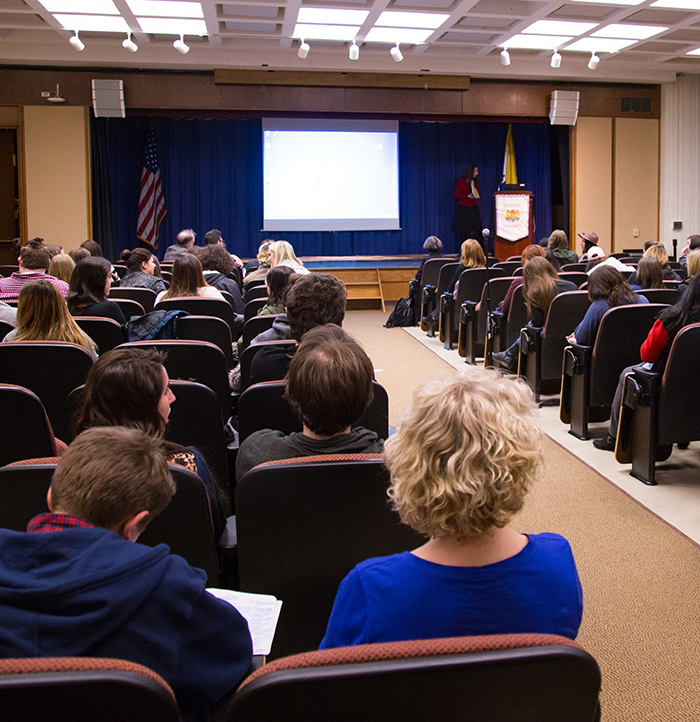
Great Writers, Great Readings
The University's Great Writers, Great Readings series has featured Emily Wilson, the classics editor of the revised Norton Anthology of World Literature and the first woman to publish a translation of Homer's Odyssey into English, as well as Daniel Mendelsohn, best-selling author of An Odyssey: A Father, a Son, and an Epic.
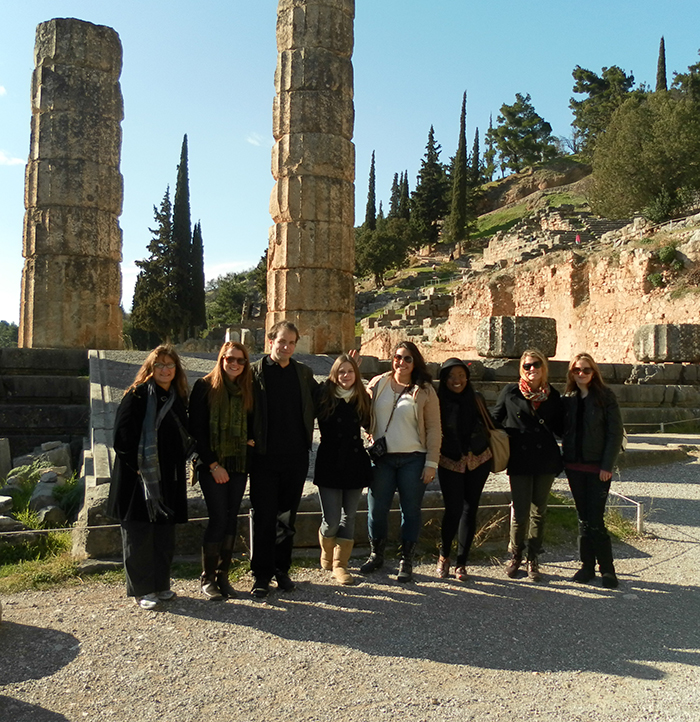
Study Abroad
Take advantage of Hofstra's study abroad programs, which are primarily held during the January and summer sessions. These include an annual winter experience in Greece.
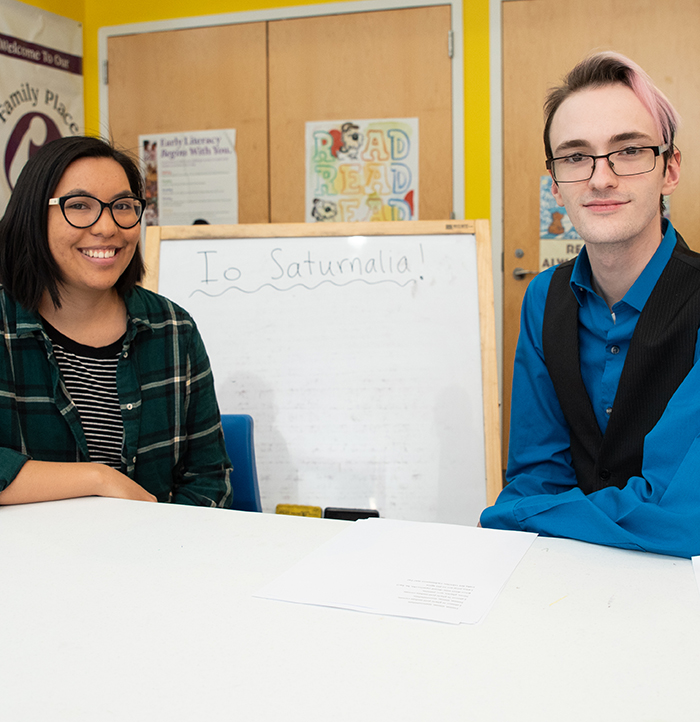
Community Outreach
Students are encouraged to share their love of the classics with their peers and with the community. For example, one group of intrepid classics students taught introductory Latin classes for elementary and middle school students at a local library.
The Outlook
By the time they graduate from the program, Hofstra students are effective writers and researchers, and skilled presenters. They have fine-tuned their grammatical and syntactical precision and are well-versed in literary history, theory, and criticism; the process and theory of translation; and textual analysis. They are ready to move into the competitive world of work or an advanced studies program.
In a survey of recent graduates:
- 100% responded that they were employed or pursuing an advanced degree within one year of graduation
- 100% of students who reported employment responded that they had landed their position within six months of graduation
- $56K is the annual mean reported salary for 2022-2023 graduates in this area of study
Our alumni may be found working as:
- Educators
- Government analysts
- Journalists
- Language translators and interpreters
- Lawyers
- Research Assistants
- Publishing executives
Some have landed positions working overseas for American-based companies.
They are pursuing advanced degrees at:
- Harvard University
- Hofstra University
- SUNY Stony Brook University
- University of Hawaii
- University of Pennsylvania
- Univresity of Tennessee, Knoxville
- Vermont Law and Graduate School
Their study courses include the classics, Japanese, education, law and medicine.
Contact Us
Visit our department website
John Krapp, PhD, Department Chair
Room 312C Calkins Hall
Phone: 516-463-5843
Email