



LATIN AMERICAN AND CARIBBEAN STUDIES
Events hosted by the Latin American and Caribbean Studies rogram are FREE and open to the public. To RSVP, visit events.hofstra.edu.
For more information, email LACS@hofstra.edu.
Spring 2026
February 11, 4:20 – 5:45 p.m.
Breslin 208
The Great Hispanic Writers Series presents Juan Luis Landaeta
Juan Luis Landaeta (Caracas, Venezuela) will be reading his poems in a bilingual format and will give a talk about the relationship between poetry and painting, as he himself is a practitioner of both genres. He is the author of several poetry books, among which the following stand out: La conocida herencia de las formas, Litoral central, and Roca Tarpeya. He is also a multidisciplinary artist with a Master’s degree in Creative Writing from New York University. His solo exhibitions include Jardín Desierto (Brooklyn, 2017), The identity of the line (2019), Unwritten (Washington D.C., 2019), New Works / New Paintings (New York, 2024), DOXA (Washington D.C., 2025) and Confinement is a vocabulary (Chicago, 2025). Landaeta has given talks and lectures on creativity and the intersection of literature and visual art at Emerson College and Georgetown University, as well as at universities in several Latin American countries. He currently lives and works in New York City.
Organized by Professor Miguel-Ángel Zapata, The Great Hispanic Writers Series is a programming jointly sponsored by the Dean of the Hofstra College of Liberal Arts and Sciences, the Department of Romance Languages and Literatures, the Latin American and Caribbean Studies Program, and the Hofstra Cultural Center.
February 23, 1:15 – 2:15 p.m.
Calkins 332
Lunes de Poesía | Coffee & Poetry Mondays
Please join us in these biweekly sessions to read, discuss, and write poetry in Spanish at the Romance Languages and Literatures Department. Led by Professor and poet Miguel-Angel Zapata, these gatherings will feature readings of compelling poems, in Spanish and in English translation, and discussions of both canonical and contemporary Hispanic poetry. Sessions are open to all Hofstra students, faculty, members of the campus community, and beyond. No reservation needed.
Organized by Miguel-Angel Zapata, this program is part of the Great Hispanic Writers Series and jointly sponsored by the Dean of the Hofstra College of Liberal Arts and Sciences, the Department of Romance Languages and Literatures, the Spanish Club, the Latin American and Caribbean Studies Program, and the Hofstra Cultural Center.
March 3, 2:40 – 4:05 p.m.
Guthart Cultural Center Theater
“From the Monroe Doctrine to Donald Trump 2.0: The U.S., Latin America and Regional Resistance to the New Imperialism”
The Trump Administration has openly declared the U.S.’s right to dominate the Western Hemisphere for “security” and natural resources, openly stating it would “run Venezuela” to manage the country’s oil, while threatening similar, broader actions across Latin America to combat drug trafficking and foreign influence. While obedient right-wing allies across the hemisphere welcome Washington’s renewed aggressive approach to the region, there is a growing movement throughout the Americas that is confronting U.S. militarism, contesting corporate domination, and rejecting interventionism. This international panel of experts will examine the many risks of the current context as they pertain to democracy, human rights, neo-colonialism and national sovereignty.
Moderated by Mario A. Murillo, Professor, Vice Dean, The Lawrence Herbert School of Communication, and Conrad Herold, Ph.D., Associate Professor of Economics
Panelists:
- Steve Ellner, Ph.D., retired professor of the Universidad de Oriente in Venezuela, Associate Managing Editor of Latin American Perspectives (in person).
- Jacqueline Laguardia Martinez, Ph.D., Senior Lecturer, University of the West Indies – St. Augustine in Trinidad, from Cuba (via zoom).
- Manuel Rozental, Colombian physician, veteran social justice activist, Pueblos en Camino, Cauca, Colombia, (via zoom).
- Alejandro Velasco, Ph.D., Professor & Researcher, New York University, editor of NACLA Report on the Americas (in person).
March 4, 11:20 a.m. – 12:45 p.m.
Leo A. Guthart Cultral Center Theater, Axinn Library, First Floor
“When Words Become Power: The Political Life of the Spanish Language,” Professor José Del Valle (CUNY)
Join us for a public conversation with Professor José del Valle, one of the leading voices in contemporary debates on language, ideology, and power. Guided by Hofstra University Professor Vicente Lledó-Guillem. The discussion acclaimed 2024 book The Politics of Language: A Journey Through Spanish and Its Discontents, an accessible and influential work that examines how language functions as a political and social force and invites us to reflect on whose voices are empowered—and whose are silenced—through language
Organized by Professor Vicente Lledó-Guillem and sponsored by the Department of Romance Languages and Literatures, the Latin American and Caribbean Studies Program, the European Studies Program and the Hofstra Cultural Center.
March 4, 4:20 – 5:45 p.m.
246 East Wing Library, Axinn Library Floor
The Great Hispanic Writers Series presents Efrain Barolome
In dialogue with Professor Miguel-Ángel Zapata and Hofstra students and faculty, Efraín Bartolomé, poet and professor was born in Chiapas, Mexico, will discuss the state of contemporary Mexican and Latin American poetry, and will offer a reading of his poetry in a bilingual format. His work, which now comprises more than twenty-five titles, has been published in four anthologies, two in Mexico and two in Spain: Agua Lustral. Poesía 1982-1987 (México, 1994); Oficio Arder. Obra poética 1982-1997 (México, 1999); El Ser que Somos (Seville, Spain, 2006); and Cabalgar en las Alas de la Tormenta (Cartagena, Spain, 2015). He has received the following distinctions: Mexico City Prize 1982; Aguascalientes National Poetry Prize 1984; Carlos Pellicer National Poetry Prize for Published Work 1992; Gilberto Owen National Literature Prize 1993; Jaime Sabines International Poetry Prize 1996. His poems have been translated into English, French, Portuguese, German, Italian, Galician, Arabic, Japanese, Macedonian, Yucatec Maya, Nahuatl, and Esperanto.
Organized by professor Miguel-Ángel Zapata, The Great Hispanic Writers Series is a programming jointly sponsored by the Dean of the Hofstra College of Liberal Arts and Sciences, the Department of Romance Languages and Literatures, the Latin American and Caribbean Studies Program, and the Hofstra Cultural Center.
March 9, 1:15 – 2:15 p.m.
Calkins 332
Lunes de Poesía | Coffee & Poetry Mondays
Please join us in these biweekly sessions to read, discuss, and write poetry in Spanish at the Romance Languages and Literatures Department. Led by Professor and poet Miguel-Angel Zapata, these gatherings will feature readings of compelling poems, in Spanish and in English translation, and discussions of both canonical and contemporary Hispanic poetry. Sessions are open to all Hofstra students, faculty, members of the campus community, and beyond. No reservation needed.
Organized by Miguel-Angel Zapata, this program is part of the Great Hispanic Writers Series and jointly sponsored by the Dean of the Hofstra College of Liberal Arts and Sciences, the Department of Romance Languages and Literatures, the Spanish Club, the Latin American and Caribbean Studies Program, and the Hofstra Cultural Center.
March 11, 2:40 – 4:05 p.m.
Cultural Center Theater
Untold Stories of Revolution: Indigenous and Black Voices
John Staudt: moderator
Panelists:
- Jennifer Anderson, Associate Professor of Atlantic History, Stonybrook University
- Lynda Day, Professor, Africana Studies, Brooklyn College
- Rashad Young, Project Director for the Language Project for MPTN (Mashantucket Pequot Tribal Nation)
- Nakai Northup, Mashantucket Pequot Museum and Research Center Head of Education, Pequot Tribal Nation
Reception immediately following at the Museum with Native American musicians.
March 23, 1:15 – 2:15 p.m.
Calkins 332
Lunes de Poesía | Coffee & Poetry Mondays
Please join us in these biweekly sessions to read, discuss, and write poetry in Spanish at the Romance Languages and Literatures Department. Led by Professor and poet Miguel-Angel Zapata, these gatherings will feature readings of compelling poems, in Spanish and in English translation, and discussions of both canonical and contemporary Hispanic poetry. Sessions are open to all Hofstra students, faculty, members of the campus community, and beyond. No reservation needed.
Organized by Miguel-Angel Zapata, this program is part of the Great Hispanic Writers Series and jointly sponsored by the Dean of the Hofstra College of Liberal Arts and Sciences, the Department of Romance Languages and Literatures, the Spanish Club, the Latin American and Caribbean Studies Program, and the Hofstra Cultural Center.
March 25th, 2:40 – 4:05 p.m.
Guthart Theatre
Book Talk: History of Deportation
Professor Adam Goodman (University of Illinois, Chicago)
April 6, 1:15 – 2:15 p.m.
Calkins 332
Lunes de Poesía | Coffee & Poetry Mondays
Please join us in these biweekly sessions to read, discuss, and write poetry in Spanish at the Romance Languages and Literatures Department. Led by Professor and poet Miguel-Angel Zapata, these gatherings will feature readings of compelling poems, in Spanish and in English translation, and discussions of both canonical and contemporary Hispanic poetry. Sessions are open to all Hofstra students, faculty, members of the campus community, and beyond. No reservation needed.
Organized by Miguel-Angel Zapata, this program is part of the Great Hispanic Writers Series and jointly sponsored by the Dean of the Hofstra College of Liberal Arts and Sciences, the Department of Romance Languages and Literatures, the Spanish Club, the Latin American and Caribbean Studies Program, and the Hofstra Cultural Center.
April 15, 2:40 – 4:05 p.m.
Cultural Center Theater
(Untold) Stories of Revolution in the Atlantic World: Haiti and Latin America
- Millery Polyné, Associate Professor, Caribbean & Latin American History, New York University
- Yesenia Barragan, Associate Professor, History of the Americas and Atlantic and Pacific Worlds, Rutgers University
Reception on April 15th in the Museum at 4:30 pm with a Lecture/Demonstration by Caroline Copeland, “Dancing the American Revolution.”
April 20, 1:15 – 2:15 p.m.
Calkins 332
Lunes de Poesía | Coffee & Poetry Mondays
Please join us in these biweekly sessions to read, discuss, and write poetry in Spanish at the Romance Languages and Literatures Department. Led by Professor and poet Miguel-Angel Zapata, these gatherings will feature readings of compelling poems, in Spanish and in English translation, and discussions of both canonical and contemporary Hispanic poetry. Sessions are open to all Hofstra students, faculty, members of the campus community, and beyond. No reservation needed.
Organized by Miguel-Angel Zapata, this program is part of the Great Hispanic Writers Series and jointly sponsored by the Dean of the Hofstra College of Liberal Arts and Sciences, the Department of Romance Languages and Literatures, the Spanish Club, the Latin American and Caribbean Studies Program, and the Hofstra Cultural Center.
April 22, 4:20 – 5:45 p.m.
Breslin 208
The Great Hispanic Writers Series presents Andrea Cabel
Andrea Cabel is a Peruvian poet and essayist who will be giving a talk on contemporary Peruvian poetry (1980-2025) and reading her poetry in a bilingual format. She is currently an Associate Professor at the Universidad Nacional Mayor de San Marcos in Lima, Peru. She holds a Ph.D. and a Master’s degree in Latin American Literature from the University of Pittsburgh, United States. She is a member of the Board of Directors of the Antonio Cornejo Polar Center for Latin American Studies (CELACP). She has published articles on Peruvian Amazonian culture and Peruvian and Latin American poetry. Her published poetry collections include: “Las falsas actitudes del agua” (The False Attitudes of Water), “Uno rojo” (One Red), “Latitud de Fuego” (Latitude of Fire), and “A dónde volver. Poemas reunidos” (Where to Return: Collected Poems).
Organized by professor Miguel-Ángel Zapata, The Great Hispanic Writers Series is a programming jointly sponsored by the Dean of the Hofstra College of Liberal Arts and Sciences, the Department of Romance Languages and Literatures, the Latin American and Caribbean Studies Program, and the Hofstra Cultural Center.
April 30, 2:40 – 4:55 p.m.
246 East Library Wing, Axinn Library 2nd floor
Book talk: España rarita
Dr. Daniel Valtueña, IE University
Queer Spanishness: Neo-folkloric Music beyond Rosalia in Contemporary Spanish Culture
Since the release of El mal querer (2018) by Spanish singer Rosalía, a significant number of musical artists across the Iberian Peninsula have turned to folklore to give rise to original and innovative proposals. This phenomenon is not only happening in Spain but in other Spanish-speaking countries with artists attending folkloric music such as Puerto Rican star Bad Bunny, Colombian group Meridian Brothers or Chilean singer Mon Laferte. In this talk Daniel Valtueña aims to establish the corpus surrounding this creative trend known as «folktronica» and to link its emergence and popularity to the identity crisis resulting from the aftermath of the 2008 financial crisis. Maria Arnal i Marcel Bagés, Baiuca, Rodrigo Cuevas, Verde Prato, Dulzaro, Guitarricadelafuente, Ángeles Toledano or Lagartijas del Guadiana are some of other artists that propose alternative community projects based on traditional music in the form of «transnations», drawing on Jack Halberstam’s theories regarding the trans body. Their musical projects not only renew the communal identifications folklore is known for, but aim to respond to some of the key challenges the world faces today in both sides of the Atlantic including environmental sustainability, social justice, or the rise of artificial intelligence.
May 4, 1:15 – 2:15 p.m.
Calkins 332
Lunes de Poesía | Coffee & Poetry Mondays
Please join us in these biweekly sessions to read, discuss, and write poetry in Spanish at the Romance Languages and Literatures Department. Led by Professor and poet Miguel-Angel Zapata, these gatherings will feature readings of compelling poems, in Spanish and in English translation, and discussions of both canonical and contemporary Hispanic poetry. Sessions are open to all Hofstra students, faculty, members of the campus community, and beyond. No reservation needed.
Organized by Miguel-Angel Zapata, this program is part of the Great Hispanic Writers Series and jointly sponsored by the Dean of the Hofstra College of Liberal Arts and Sciences, the Department of Romance Languages and Literatures, the Spanish Club, the Latin American and Caribbean Studies Program, and the Hofstra Cultural Center.
Past Events
Lunes de Poesía | Coffee & Poetry Mondays
1:00 – 2:00p.m.
September 22, October 13, October 27, November 10, November 24, December 8
Please join us in these biweekly sessions to read, discuss, and write poetry in Spanish at the Romance Languages and Literatures Department. Led by Professor and poet Natalia Chamorro, these gatherings will feature readings of compelling poems, in Spanish and in English translation, and discussions of both canonical and contemporary Hispanic poetry. Sessions are open to all Hofstra students, faculty, members of the campus community and beyond. No reservation needed.
Organized by Natalia Chamorro, this programming is part of the Great Hispanic Writers Series and jointly sponsored by the Dean of the Hofstra College of Liberal Arts and Sciences, the Department of Romance Languages and Literatures, the Latin American and Caribbean Studies Program, and the Hofstra Cultural Center.
Parlor Room, Hofstra Hall
Monday, September 29, 2:40-4:05 p.m.
Is ‘Hispanic/Latino’ a racial category?
with María Abascal
María Abascal: “Is ‘Hispanic/Latino’ a racial category?”
Are Latinos in the United States seen (or destined to be seen) as a racial group? On the one hand, the U.S. Census is adopting a question format that treats the ‘Hispanic/Latino’ category as a race, a decision based, in part, on how self-identified Latinos define themselves. On the other hand, people who self-identify as ‘Hispanic/Latino’ are phenotypically diverse, and recent research uncovers substantial ambiguity around who is classified as ‘Hispanic/Latino’, more so than around who is classified as White, Black, or Asian. This presentation explores the racialization of the ‘Hispanic/Latino’ category using an original survey that captures how people who self-identify as Latino are classified by a race-stratified sample of non-Hispanic White, non-Hispanic Black, and Hispanic/Latino Americans.
Maria Abascal is Associate Professor of Sociology at New York University.
Organized by Francisco Lara-García and co-sponsored by the Latin American and Caribbean Studies Program, the Department of Sociology, Criminology and Anthropology, the Department of History, the Jewish Studies Program, and the Hofstra Cultural Center.
East Library Wing 246
Joan and Donald E. Axinn Library, Second Floor, South Campus
Wednesday, October 8, 2:40 – 4:05p.m.
The Great Hispanic Writers Series presents Roxana Crisólogo (Perú)
The Great Hispanic Writers Series presents Roxana Crisólogo for a bilingual poetry reading, and dialogue with Professor Miguel Ángel Zapata, about poetry, the translation process, and the Peruvian author’s Finnish experience.
Roxana Crisólogo (poet, translator, and cultural worker; Peru/Finland) is the author of Esta canción no termina de salir de mi boca (AUB, 2025). Among her other books are Dónde dejar tanto ruido and Kauneus [Beauty], both now in their third editions. In 2013, she founded Sivuvalo in Helsinki, a platform dedicated to promoting Finnish literature abroad through translation, and to supporting immigrant writers in Finland. She has been a Kone Foundation Fellow for projects such as Is This Finnish Literature? and New Havens & Humanoids. She is currently attending the International Writing Program at the University of Iowa.
The Great Hispanic Writers Series is a programming jointly sponsored by the Dean of the Hofstra College of Liberal Arts and Sciences, the Department of Romance Languages and Literatures, the Latin American and Caribbean Studies Program, and the Hofstra Cultural Center. For information, please contact Miguel Ángel Zapata (miguel-angel.zapata@hofstra.edu).
Parlor Room, Hofstra Hall
Hofstra University Cultural Center
and the The Lawrence Herbert School of Communication
present the inaugural event of the
Thursday, October 9, 4-9 p.m.
The First New York Central American International Film Festival, CAFFEIN
Guatemalan, Honduran and Salvadoran Filmmakers will be presenting their original cinematic work, engaging our local communities about current and historical issues and events through their extraordinary range of filmmaking and storytelling. Programming on campus will include a panel about Central American film (with both live and zoomed-in guests), and the screening of several films, including Fly So Far(2021) directed by Celina Escher from El Salvador, María in Nobody’s Land (2011) by Marcela Zamora from El Salvador, and the participation of Deborah Shaffer, Oscar-winning documentary filmmaker and Daniel Flores Ascencio, poet, filmmaker, and director of CAFFEIN Maya Aguachapaneco/Nonualka.
The First New York Central American International Film Festival, CAFFEIN will take place on October 9 to 11 in several venues in Uniondale and Hempstead, in Nassau County on Long Island. The inaugural day will be held at Hofstra University. Organized by Mario Murillo and co-sponsored by the Department of Radio, Television and Film, the Center for Civic Engagement, the Center for “Race,” Culture and Social Justice, the Latin American and Caribbean Studies Program, and the Hofstra Cultural Center.
Leo A. Guthart Cultural Center Theater
Joan and Donald E. Axinn Library, First Floor, South Campus
Monday, October 20, 11:20 a.m.-12:40 p.m.
Professor Ege Selin Islekel (Texas A&M University) will present her new book Nightmare Remains: The Politics of Mourning and Epistemologies of Disappearance (Northwestern University Press, 2024), a philosophical and interdisciplinary study of political disappearances.
Organized by Julie Byrne and co-sponsored by the Department of Religion, the Hofstra Cultural Center, the Rabinowitz Honors College, and the Latin American and Caribbean Studies Program.
Leo A. Guthart Cultural Center Theater
Joan and Donald E. Axinn Library, First Floor, South Campus
Thursday, November 6, 2:40-4:05 p.m.
“Cervantine Blackness”. A panel discussion and presentation with Nicholas R. Jones (Yale University) and Víctor Sierra Matute (Baruch College).
During the politically intense days of the Summer of 2020 a group of people protesting the killing of George Floyd tagged with graffiti a monument to Miguel de Cervantes in San Francisco’s Golden Gate Park. The event produced an enormous outrage in the international media and diplomatic circles. Nicholas R. Jones, a critic and professor in the Department of Spanish and Portuguese at Yale University, raised a fundamental question about this debate: Do Black Lives Matter less than a monument to the beloved author of Don Quixote? Great questions produce great answers, so, armed with a formidable encyclopedia of critical tools from literary, race, social justice, and cultural theory, Jones wrote a brilliant meditation –and 3 more—wondering about the subjects of monumentality, the problem of limiting literary studies to the search of agency, the idea of literary criticism as a form of extraction, and much more. The result of this meditative, intensely literary work is Cervantine Blackness (Penn State University Press, 2024),a brilliant book that renews how we can think about literary production in the convoluted multi-everything world of the early modern moment of the Spanish Empire.
Nicholas R. Jones is Associate Professor in the Department of Spanish and Portuguese at Yale University and the author of the prize-winning Staging Habla de Negros: Radical Performances of the African Diaspora in Early Modern Spain (Penn State University Press, 2019). With him, will be Víctor Sierra Matute, Assistant Professor in the Comparative Literature Program at CUNY’s Baruch College. He is the editor of Soundscapes of the Early Modern Hispanophone and Lusophone Worlds (Routledge, 2015) and the author of the forthcoming book A Sense of Empire: Perceptual and Material Foundations of Early Modern Iberian Colonialism.
Organized by Álvaro Enrigue and co-sponsored by the Hofstra Rabinowitz Honors College, the Department of Romance Languages and Literatures, the Latin American and Caribbean Studies Program, and the Hofstra Cultural Center.
East Library Wing 246
Joan and Donald E. Axinn Library, Second Floor, South Campus
For more information visit Hofstra Cultural Center Grants.
February 24 through May 5, 2025
Lunes de poesía. Coffee & Poetry Mondays
1:30-2:00p.m. | Room 300, Calkins Hall
The Great Hispanic Writers Series presents Lunes de poesía. Coffee & Poetry Mondays, a biweekly programming designed as a space where students and faculty can read and discuss their own poetry, as well as compelling poems from canonical and contemporary Hispanic authors. Sessions are scheduled for Monday, February 24, March 10, March 24, April 7, April 21, and May 5.
Organized by Hofstra professors and poets Miguel Ángel Zapata and Natalia Chamorro, as part of the campus programming of The Great Hispanic Writers Series, and with the support of the Department of Romance Languages and Literatures and the Latin American and Caribbean Studies Program.
Wednesday, February 26, 2025
2:40-4:05p.m. | Leo A. Guthart Cultural Center Theater, Axinn Library
Book presentation: Dreams Achieved and Denied: Mexican Intergenerational Mobility (Russell Sage Foundation, 2024) by Robert Courtney Smith (CUNY Graduate Center). For over twenty years, the author followed the lives and mobility patters of nearly one hundred children of Mexican immigrants in New York City. His presentation will examine the laws, politics, and individual and family practices that promoted (and inhibited) their social mobility.
Organized by Francisco Lara García and co-sponsored by the Latin American and Caribbean Studies Program, the Department of Sociology, and the Hofstra Cultural Center.
Thursday, March 6, 2025
9:40-10:35a.m. | Room 142, Monroe Hall
Public lecture: Jewish Women Fighting for Social Justice on both Sides of the Mediterranean, by Raanan Rein, Elias Sourasky Professor of Latin American and Spanish History and former Vice President of Tel Aviv University. This presentation explores the trajectories of women from the Jewish Yishuv in Palestine who participated in the Spanish Civil War. We will focus on their life histories and political commitments; their trajectories illustrate not only international women’s participation in the Spanish War, but also the diverse motives for volunteering in the Iberian conflict.
Organized by Santiago Slabodsky and Brenda Elsey, and co-sponsored by the Stuart and Nancy Rabinowitz Honors College, the Department of Religion, the Department of History, the Jewish Studies Program, the Latin American and Caribbean Studies Program, and the Hofstra Cultural Center.
Monday, March 10, 2025
6:00-9:00p.m. | Room 114, The Lawrence Herbert School of Communication
Live From Studio A: EscuchARTE: Latin America, through Words and Song. From the Rio Grande to Patagonia, music is the mirror into which Latin Americans look in search of their spirit and soul. We propose a special evening of exploration through the musical landscapes of the all too different regions of this diverse and vibrant constellation of cultures. Featuring Hofstra music professor Hector Martignon, world renowned pianist, arranger, and composer.
Organized by Mario Murillo and Randal K. Hillebrand and co-sponsored by the Lawrence Herbert School of Communication, the Department of Music, the Latin American and Caribbean Studies Program and the Hofstra Cultural Center.
Tuesday, March 11, 2025
2:40-4:05p.m. | Location TBD
Roundtable: ¡Basta ya! Why the Blockade Against Cuba Must End
In this roundtable discussion, we will hear back from the Hofstra students and faculty members who participated in the Hofstra Study Abroad Program to Havana in January 2025. We will explore the long history of the U.S. strategy of regime change in Cuba, since the triumph of the revolution in 1959, and provide a systematic overview of the economic, political, and information stranglehold that both Republican and Democratic administrations have applied to Cuba, resulting in an ever-expanding crisis for the people on the island. With the participation of Hofstra University professors Mario A. Murillo and Conrad Herold
Organized by the Center for Civic Engagement, as part of Global Justice Day, with the collaboration of the Latin American and Caribbean Studies Program.
Wednesday, March 12, 2025
2:40-4:05p.m. | 246 East Library Wing, Axinn Library, Second Floor
Talk (in Spanish): La novela hispanoamericana hoy: retos, transformaciones y horizontes futuros by Luis Mora-Ballesteros (U.S. Naval Academy).
This lecture will address the evolution of contemporary Latin American novels, analyzing the impact of dystopias and urban representations in current literature. Luis Mora-Ballesteros is a Venezuelan-American novelist, and professor of Spanish and Latin American Literature at the U.S. Naval Academy. He is the author of the book monographs Ciudades y mundos posibles. Distopías y estados de control en la novela hispanoamericana contemporánea (2025), and Prácticas críticas: Apuntes sobre literaturas urbanas del Caribe hispánico (2022). In the creative field, he is the author of the border trilogy which includes the novels Díptico de la frontera (2020) and La sombra del comandante (2022). The first novel in the trilogy, Díptico de la frontera, was a finalist in the I Certamen de Novela Martín Fierro (Spain, 2019) and was recently translated into English as Border Diptych (2024).
Organized by Alfonso García-Osuna and co-sponsored by the Department of Romance Languages and Literatures and the Latin American and Caribbean Studies Program, with the collaboration of the Hofstra Cultural Center.
Wednesday, April 2, 2025
Maryse Condé, the Journey of a Caribbean Writer
4:20-5:45p.m. | 246 East Library Wing, Axinn Library, Second Floor
Maryse Condé, the Journey of a Caribbean Writer
Maryse Condé (1934-2024) was a novelist, critic, and playwright from Guadeloupe, and an academic whose career took her to West Africa, Europe, and the United States: she taught at universities in Guinea Bissau, Ghana, Senegal, France, and the United States. Her last faculty appointment was as Professor of French and Francophone Studies at Columbia University in New York. Her work explores issues of race, gender, colonialism, displacement, and the African diaspora. She is the author of many books, including, I, Tituba, Black Witch of Salem (1992),The Journey of a Caribbean Writer (2014), and The Gospel According to the New World (2021).
Defiant Desire: Love, Freedom, and Disorderly Women in the Work of Maryse Condé by Kaiama L. Glover
Organized by Sabine Loucif and co-sponsored by the Department of Romance Languages and Literatures, the Latin American and Caribbean Studies Program, and the Hofstra Cultural Center.
For more detail, please contact Professor Sabine Loucif at sabine.loucif@hofstra.edu.
Wednesday, April 9, 2025
11:30-12:45p.m. | Parlor Room, Hofstra Hall
Bilingual Poetry Reading and Dialogue with Hugo Mujica
Hugo Mujica was born in Buenos Aires, Argentina. He studied Fine Arts, Philosophy, Philosophical Anthropology and Theology. His poetry has been published in Argentina, Spain, Italy, France, Mexico, United States, Chile, Slovenia, and Bulgaria. In 2005, Seix Barral published his Complete Poetry, 1983-2004. In 2011 he published the poetry collection Y siempre después el viento. Both in his poetry and his prose, he draws inspiration from his experiences, which include living in Greenwich Village in the 1960s as a visual artist, and seven years of silent monastic life as part of the Trappist Order.
Organized by Miguel Ángel Zapata, the Great Hispanic Writers Series is a program jointly sponsored by the Dean of the Hofstra College of Liberal Arts and Sciences, the Department of Romance Languages and Literatures, the Latin American and Caribbean Studies Program, and the Hofstra Cultural Center.
Wednesday, April 16, 2025
2:40-4:05p.m. | Leo A. Guthart Cultural Center Theater, Axinn Library
Film screening: Norita (2024), directed by Jayson McNamara and Andrea Carbonatto Tortonese. Norita Cortiña’s search for her son accelerates the defeat of the dictatorship in Argentina and inspires a new global generation of women fighting for their freedoms.
4:20-5:45p.m. | 246 East Library Wing, Axinn Library, Second Floor
Film discussion: facilitated by the producer of the film, Sarah A. Schoellkopf. Her work includes Norita (2024), and Ferguson Rising (2021).
Organized by Vicente Lledó-Guillem and co-sponsored by the Department of Romance Languages and Literatures, the Women’s Studies Program, the Kalikow School for Public Policy and Public Service Program, the Latin American and Caribbean Studies Program, the Stuart and Nancy Rabinowitz Honors College, and the Hofstra Cultural Center.
Wednesday, April 30, 2025
11:20 am-12:45 pm. | Parlor Room, Hofstra Hall
The Great Hispanic Writers Series presents: Roger Santiváñez and Juan Arabia
Bilingual Poetry Reading and Dialogue about the New Directions of Latin American Poetry
Roger Santiváñez was born in Piura, Peru. He studied literature at the Universidad Nacional Mayor de San Marcos and earned a doctorate in Latin American poetry from Temple University. Comunión de los santos (Communion of Saints) is the title of his most recent collection of poetry, published by Libros de la Resistencia (Madrid, 2023). His book Virgen de Guadalupe (Our Lady of Guadalupe) has just been published in Mexico. He has worked at Princeton University, among other institutions in the United States.
Juan Arabia is an Argentinian poet, translator, and literary critic. His recent books include, Encrapuler (Buenos Aires Poetry, 2025), Desalojo de la naturaleza (Buenos Aires Poetry, 2018), Hacia Carcassonne (Pre-Textos, 2021), and Verso Carcassonne (Raffaelli Editore, 2022). He has also translated works by Ezra Pound, Arthur Rimbaud, Dylan Thomas, and Dan Fante. He is the founder and director of the cultural and literary project Buenos Aires Poetry.
The Great Hispanic Writers Series is a program jointly sponsored by the Dean of the Hofstra College of Liberal Arts and Sciences, the Department of Romance Languages and Literatures, the Latin American and Caribbean Studies Program, The Stuart and Nancy Rabinowitz Honors College, the European Studies Program, The Women’s Studies Program, and the Hofstra Cultural Center. For information, please contact Professor Miguel Ángel Zapata.
2:40-4:05p.m. | Parlor Room, Hofstra Hall
The Great Hispanic Writers Series presents: Against the Breaking of Balance and Harmony in Contemporary Hispanic Poetry.
Much of current Hispanic poetry is heading towards exaggerated dislocation and nonsense. In this colloquium we will establish a dialogue on how a poem should be written without losing its balance and harmony. We will engage with some of the masters of contemporary poetry who have served as a model in the practice of clarity and depth in the poem. Harmony and balance, in the end, are the core of the structure of a poem. Even when there is a kind of play with the form, deep down the poem must have meaning and move us beyond the ethics of language. Participants include Juan Arabia, Roxana Crisólogo, Rodolfo Häsler, and María Ángeles Pérez López.
Organized by Miguel Ángel Zapata, the Great Hispanic Writers Series is a program jointly sponsored by the Dean of the Hofstra College of Liberal Arts and Sciences, the Department of Romance Languages and Literatures, the Latin American and Caribbean Studies Program, and the Hofstra Cultural Center.
Monday, May 5, 2025
2:40-4:05p.m. & 4:20-5:45p.m. | Room 212, Roosevelt Hall
Public talk: Rethinking Race, Gender, and Urban Planning in Cinematic Imaginaries. The Case of West Side Story by Alberzo Berzosa (Universidad Autónoma of Madrid). This lecture will address the process of rethinking sociocultural imaginaries in dialogue with some tenets of American mythology embedded in Hollywood cinema, focusing on Steven Spielberg’s version of West Side Story (2021). In this film, the director recomposes and re-equalizes the classic 1961 film, enhancing the presence of racialized agents, opening up spaces for non-normative gender identities, and adding contemporary themes about the processes of economic and urban development in New York City, such as the gentrification of the West Side.
Alberto Berzosa is a professor of Art History and Theory of Art and works at the intersection of the history of art, Spanish cinema, political archives, and curatorship. He is the author of two book monographs: Materiales para una utopía ecologista. Cartografía de archivos del movimiento ecologista en España (2023), and Cine y sexopolítica (2020). He is also the codirector of the documentary film Memorias de ultramar (2021) and has curated several exhibitions for La Casa Encendida (Madrid), the Museu d’Art Contemporani de Barcelona, and the Institut Valenciá d’Art Modern in Spain.
Organized by Benita Sampedro Vizcaya and co-sponsored by the Department of Romance Languages and Literatures and the Latin American and Caribbean Studies Program, with the support of the Hofstra Cultural Center and the research project “Institutional Documentary & Amateur Cinema in the Colonial Era: Analysis and Uses” (PID2021-123567NB-I00) financed by Spanish Ministry of Science and Innovation/State Research Agency of the Spanish Government and the European Regional Development Fund.
Wednesday, September 11, 4:20-5:45 p.m.
Great Hispanic Writers Series
Renowned Spanish poet, Juan Carlos Abril, will present a bilingual poetry reading and lead a dialogue about contemporary Hispanic poetry with Hofstra professor Miguel Ángel Zapata.
Abril is a professor of Spanish literature at the University of Granada, Spain. His poetry books include Poesía reunida (1997-2023) (Pre-Textos, 2024), En busca de una pausa (Pre-Textos, 2018), Crisis (Pre-Textos, 2007), and the book of essays, La tercera vía. La poesía española: entre la tradición y la vanguardia (Pre-Textos, 2024). He has also edited anthologies of poetry by authors such as Francisco Brines, José Caballero Bonald, Luis García Montero, and María Auxiliadora Álvarez.
Presented by the dean of the Hofstra College of Liberal Arts and Sciences, the Department of Romance Languages and Literatures, the Latin American and Caribbean Studies Program, and the Hofstra Cultural Center.
The Great Hispanic Writers Series is a program jointly sponsored by the dean of the Hofstra College of Liberal Arts and Sciences, the Department of Romance Languages and Literatures, the Latin American and Caribbean Studies Program, and the Hofstra Cultural Center.
246 East Library Wing
Joan and Donald E. Axinn Library, Second Floor, South Campus
For information, email Miguel Ángel Zapata at miguel-angel.zapata@hofstra.edu.
Wednesday, September 18, 4:20-5:45 p.m.
The Whites Must Go: Anti-Colonial Sentiments in Equatorial Africa
By Enrique Okenve (VIRTUAL)
Just when the colonial masters decided their African subjects would be recognized as Spaniards, Africans in Equatorial Guinea realized this was not enough and they had to expel the colonizers to be free.
Enrique Okenve teaches African history and research methods in the Department of History and Archaeology at the University of the West Indies, Mona Campus (Jamaica). A child of the Nzomo clan and Africa’s post-independence exile, he was born in Spain. There, he grew up aware of his belonging to Equatorial Guinea, while learning about his family’s opposition to colonialism and the successive dictators that have plagued the country since its independence from Spain. His cross-disciplinary research focuses on 19th- and 20th-century West Central Africa and relies heavily on oral history. His publications include articles and book chapters in English and in Spanish. He has recently completed a book manuscript that explores the development of tradition as an ideological tool to resist the Spanish colonial state in Equatorial Guinea and is currently working on a new book project that examines transcontinental ties and the human factor behind the involvement of colonized Africans in the anti-colonial nationalist movement. His work also includes media outreach, having recently hosted a weekly history radio show on one of Jamaica’s radio stations.
This programming is made possible thanks to a collaboration with New York University’s King Juan Carlos I Center and the Center’s director, Jordana Mendelson. Enrique Okenve will deliver the following lecture at NYU on Thursday, September 19 at 6 p.m.: “Behind the Gaze: Spanish Power and Fang Humiliation in Equatorial Guinea.” First their culture and bodies were vilified, then came the conquest and subjugation of Fang men and women who never accepted the many forms of Spanish colonial power.
Organized by Benita Sampedro Vizcaya.
Co-sponsored by the Department of Romance Languages and Literatures, the Center for “Race,” Culture and Social Justice, the Africana Studies Program, and the Hofstra University Cultural Center.
Wednesday, September 18, 7-10 p.m.
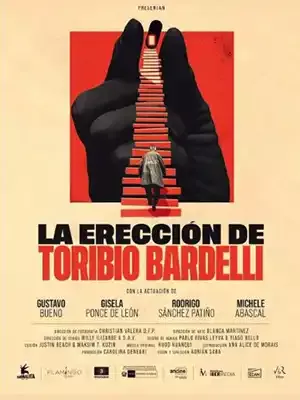
The Erection of Toribio Bardelli
Directed by Hofstra Film Alumnus Adrian Saba (2023)
Toribio Bardelli is an older man, who together with his three children, now adults, form a dysfunctional and failed family. About to turn 70, Toribio will pursue his only goal in life: to have an erection again.
Image
Monday, September 23, 2:40-4:05 p.m.
Panel discussion: Global Perspectives on the 2024 U.S. Presidential Election
Many pundits have argued that the 2024 presidential election may be one of the most consequential for the United States. Not only will the election have implications for domestic policies in the U.S., but the results will have significant reverberations around the globe. This panel will address how the U.S. election results may impact regional and global politics and policies in different parts of the world, including in Asia, Europe, Latin America, and the Caribbean, and how these regions view each of the candidates. This interdisciplinary panel will bring together Hofstra faculty members from across schools and departments, placing area studies programs at the center of the conversation on presidential elections. The panel is intended to provide a more global perspective on the presidential election, and the possible impact the outcome of the election will have across various world regions. Issues that will be raised include immigration from Latin America, the war in Ukraine, global trade, cybersecurity and the environment/climate change. Each panelist will provide an overview of the most pressing issues coming out of the specific region they will be covering, and each will assess how the presidential election outcome may impact those issues, regarding migratory policy, regional relations, bilateral agreements, war, and environmental protections. The moderator of the panel will pose questions to each participant to open the conversation of the 2024 U.S. Presidential Election to the global scene.
Moderated by Simon Doubleday, Department of History and European Studies Program
Participants:
Carolyn Dudek, (Europe) Department of Political Science and European Studies Program
Takashi Kanastu, (Asia) Department of Political Science and Asian Studies Program
Benita Sampedro Vizcaya, (Latin America and the Caribbean) Department of Romance Languages and Literatures and Latin American and Caribbean Studies Program
Conrad Herold, (Latin America and the Caribbean) Department of Economics and Latin American and Caribbean Studies Program
Organized by Carolyn Dudek.
Co-sponsored by the Hofstra Cultural Center, the European Studies Program, the Latin American and Caribbean Studies Program, and the Asian Studies Program.
Leo A. Guthart Cultural Center Theater,
Joan and Donald E. Axinn Library, First Floor, South Campus
Monday, September 30, 6-9 p.m.
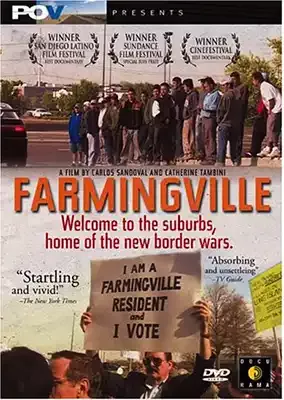
Farmingville
Directed by Catherine Tambine and Carlos Sandoval (2004)
Join us for a screening and discussion of the documentary Farmingville about immigration and its effects 20 years after its premiere. The documentary tells the story of a community in suburban Long Island in the late 1990s with an expanding population of “undocumented” immigrants and the attempted hate-based killing of two Mexican day laborers that catapulted this quiet suburb into national headlines. Discussion to follow screening moderated by Lauren Burigat-Kozol, Rabinowitz Honors College.
Panelists: Hofstra Professors Carlos Sandoval, Catherine Tambini, Mario Murillo, Alan Singer
Leo A. Guthart Cultural Center Theater, Axinn Library, First Floor, South Campus
Image
Tuesday, October 1, 2:40-4:05 p.m.
Memoria, tradición oral y pandereta. Folklore popular y sociedad rural en Galicia, España con perspectiva de género (Memory, Oral Tradition, and Pandereta: Popular Folklore and Rural Society in Galicia, Spain, with a Gender Perpective)
(Memory, Oral Tradition, and Pandereta: Popular Folklore and Rural Society in Galicia (Spain) with a Gender Perspective).
A talk (in Spanish) by Ana Cabana Iglesias, professor of contemporary Spanish and gender history at the University of Santiago de Compostela, Spain.
Historical research utilizes various sources, including the oral memory of recent generations. This talk examines the role of women in Galician oral traditions, characterized by rural life and the use of the Galician language. The focus is on analyzing songs sung by women during work, celebrations, as forms of social critique, and as political resistance during times of dictatorship. These songs, documented since the 1980s in the Galician Popular Songbook, will be explored from a historical and gender perspective. Additionally, the talk will investigate contemporary efforts to highlight and honor these melodies and recognize women as central figures in their preservation, supported by prominent folk music institutions and groups.
Organized by Pepa Anastasio.
Co-sponsored by the European Studies Program and the Department of Romance Languages and Literatures, with the support of the Hofstra Cultural Center.
Monday, October 14, 1-2:15 p.m.
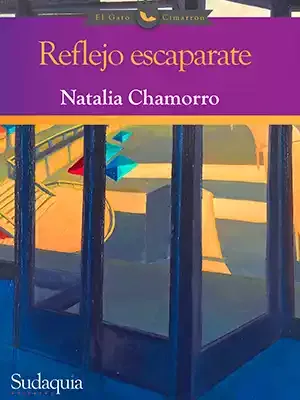
Book presentation and Poetry Reading of Reflejo escaparate
(Sudaquia Editores, 2023) by Hofstra Professor Natalia Chamorro
The book approaches the migrant’s daily epic with two great tools: intimate and intense contemplation as a form of rebellion against an alien reality, and the fear that the known world will disappear with the language. In this fear between what is perceived as foreign and the inability to name it in one’s own language, a glimpse of light appears, a voice capable of naming everything again, emotionally bilingual, fluid in a literature without genre, whose findings are offered in a showcase of which we know from the reflections that these poems emit.
Natalia Chamorro, originally from Peru, lives in New York City, and she identifies herself as a poet, immigrant, and academic passionate about the intersections of art and activism. She holds a PhD in Hispanic Literatures and Languages from Stony Brook University and teaches Spanish at Hofstra University. Before this book, her work was published in several poetry collections, and she is currently working on a book of essays tentatively titled “Escaleras de incendio.”
Organized and co-sponsored by the Department of Romance Languages and Literatures and the Latin American and Caribbean Studies Program, with the support of the Hofstra Cultural Center.
Hofstra Hall Parlor, Hofstra Hall, South Campus
Tuesday, October 15, 7-10 p.m.
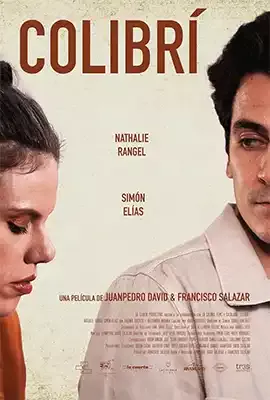
Colibri
Directed by David and Francisco Salazar
When a young Colombian couple is faced with a major change in their lives, each one will go on a personal journey to right the wrongs of the past in order to build a stronger future. COLIBRÍ made its world premiere this summer at the Festival Cine de las Montañas in Salento, Colombia, followed by a screening at the Long Island International Film Expo in July. The film opened in Colombian theaters nationally in August.
Room 211 Breslin Hall, South Campus
Tuesday, October 22, 2024
1:00-2:25p.m. | Berliner Hall 117 (in English)
2:40-4:05p.m. | Breslin Hall 202 (in Spanish)
Queer/Tango/Theory: Gendered Semiosis, Dancing the Binary, and Dancing on Out, an informal talk by Luna Beller-Tadia
Luna Beller-Tadiar (she/they) is a multi-media artist, and a doctoral student interested in kinesthetic cultures, semiotic processes, and queer and decolonial communal practices. She has recently done work on queer Argentine tango semiosis and on the circulation of gesture on TikTok and is also interested in Filipino postcolonial bodily mimetic labor. Luna makes and performs choreographic work, draws comics, and (sometimes) translates. She holds a BA in Literature from Yale University (2018) and is currently pursuing a PhD in Media, Culture, and Communication at NYU Steinhardt.
Luna’s work combines their practice as a dancer and their interest in thinking through movement. They will be talking to and with students about their more recent work, based on their experience dancing tango in different international contexts. This work conceives tango as a body-to-body communicative practice that can be analyzed politically. They point to a normative (gendered, colonial) “binary” model of tango that trains relational gender roles, and claim that queer tango, at its best, intervenes in these formations not necessarily by “removing” gender but rather by reconfiguring and repurposing forms of gendered bodily address through a less more dialogic mode of communication. They interpret queer tango as a collaborative “gender laboratory” that opens possible ways of being and moving together.
Organized by Pepa Anastasio and co-sponsored by the Department of Romance Languages and Literatures and the Latin American and Caribbean Studies Program.
Thursday, October 24, 2024
2:40-4:05p.m. |Monroe Hall 216
Musical performance and conversation with salsa pianist Nóriko Méndez
We are happy to welcome Nóriko Méndez, a talented Japanese salsa pianist whose journey has taken her throughout the world. Born and raised in Japan, Nóriko discovered her passion for Latin music early in life. Determined to deepen her understanding of the genre, she moved to Cuba, where she studied under renowned musicians and absorbed the rich musical traditions of the island. Now based in New York, the global hub of salsa, Nóriko Méndez dazzles audiences with her vibrant performances, blending the technical precision of her classical training with the soulful energy of Cuban music. Her unique fusion of cultures and sounds makes her a rising star in the salsa scene.
Organized by Alfonso García-Osuna and co-sponsored by the Department of Romance Languages and Literatures and the Latin American and Caribbean Studies Program.
Monday, November 4, 2024
4:20p.m. – 5:45p.m. | Hofstra Parlor Room, Hofstra Hall
Great Hispanic Writers Series
Poetry reading by Silvia Guerra, an award-winning Uruguayan poet and editor. She has published notable books of poetry, including A Sea at Down (Pittsburgh, 2023), Un mar en madrugada (Buenos Aires, 2017), Pulso (Madrid, 2011), Estampas de un tapiz (New York, 2006), Nada de nadie (Buenos Aires, 2001), and La sombra de la azucena (New York, 2000), among others. She is co-author, with Verónica Zondek, of the epistolary books El ojo atravesado I. Correspondence between Gabriela Mistral and Uruguayan Writers (Santiago de Chile, 2005). She is a board member of both the Mario Benedetti Foundation and the Nancy Bacelo Foundation. In 2012, she was awarded the Morosoli Prize in Poetry for her career.
The Great Hispanic Writers Series is a program jointly sponsored by the Dean of the Hofstra College of Liberal Arts and Sciences, the Department of Romance Languages and Literatures, the Latin American and Caribbean Studies Program, and the Hofstra University Cultural Center. For information, please contact Miguel Ángel Zapata at miguel-angel.zapata@hofstra.edu
Monday, November 11, 2024
2:40p.m. – 4:05p.m. | Leo A. Guthart Cultural Center Theater, Axinn Library
Great Hispanic Writers Series
Poetry reading by Giannina Braschi, a Puerto Rican fundamental poet, writer, dramatist and scholar. She has published numerous works in Spanish, Spanglish, and English, including Putinoika (Brown Ink, 2024); United States of Banana (Amazon Crossing, 2011), Yo-Yo Boing! (Latin American Literary Review Press, 1998), and El imperio de los sueños (Anthropos, 1988). Her scholarly publications include a book on Gustavo Adolfo Bécquer, and essays on Miguel de Cervantes, Garcilaso de la Vega, Antonio Machado, and Federico García Lorca. Her collected poems were translated into English by Tess O’Dwyer in a volume entitled Empire of Dreams (Yale University Press, 1994). The Library of Congress describes Giannina Braschi as “cutting-edge, influential, and even revolutionary”.
The Great Hispanic Writers Series is a program jointly sponsored by the Dean of the Hofstra College of Liberal Arts and Sciences, the Department of Romance Languages and Literatures, the Latin American and Caribbean Studies Program, and the Hofstra University Cultural Center. For information, please contact Miguel Ángel Zapata at miguel-angel.zapata@hofstra.edu
Tuesday, November 19
BOOK PRESENTATION CELEBRATING DANCE AS A FORM OF EMBODIED ACTIVISM
Mi culo es mío. Mujeres que bailan como se les canta, Mercedes Liska, U. of Buenos Aires, Gourmet Musical, 2024 (“My Butt is Mine: Women Who Dance as They Please”).
The buttocks, a focal point in popular dance, have become a contested cultural and political symbol. Erotized dance styles like perreo and twerking, and genres like cumbia or reggaeton, are often seen as sexist and degrading. However, artists and audiences reclaim these practices as expressions of bodily autonomy, and feminist discourses have embraced dance as a tool for asserting sexual sovereignty. Mi culo es mío explores Pan-Latin music’s rise and its connection to the #NiUnaMenos movement and the fight against gender violence and in support of gender rights.
Dr. Mercedes Liska is an ethnomusicologist, professor, and researcher at the National Council for Scientific and Technical Research (CONICET) in the field of sociology of music and culture at University of Buenos Aires.
1-2:25 p.m. Scholarly Panel: Dance as a Form of Embodied Activism
Dr. Mercedes Liska, University of Buenos Aires
Dr. Cloe Gentile Reyes, New York University
Dr. Pepa Anastasio, Hofstra University
2:40-4:05 p.m. La música y el baile como forma de activismo feminista: taller de investigación In this talk/workshop (in Spanish), Dr. Liska will talk about her scholarly work around popular music and dance and will introduce students to research methods in the field of ethnomusicology and cultural studies.
7-8 p.m. -BEGINNERS FEMME/HEELS MASTERCLASS with HOFSTRA ALUMNA ALICIA GAVZY
This is a space free from judgment or external expectations, encouraging everyone to find confidence, sensuality, and freedom through movement! Open to all, but space is limited, please sign up below if interested. Heels are optional and everything can be done barefoot or in sneakers if preferred).
Calkins 139 Dance Studio
Co-sponsored by Women’s Studies Program and Rabinowitz Honors College
Step into a world of intellectual discovery where critical thinking meets creative exploration. Hofstra’s liberal arts education provides the foundation for success in an ever-changing world, with faculty mentors who support your unique journey.