



COMMENCEMENT
Hofstra Grads Are Ready for What’s Next
Dive into their Q&A segments to hear, in their own words, how Hofstra shaped their journeys. From academic breakthroughs to leadership moments and personal growth, these stories highlight what it means to be a Hofstra grad.
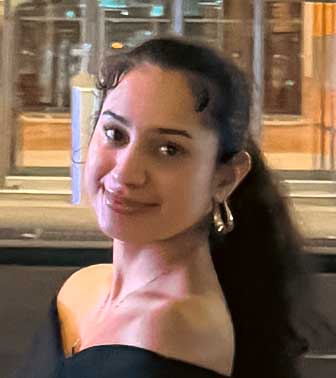
Mariela Contreras
School: Hofstra School of Health Sciences
Major: Health Science
Hometown: Annapolis, Maryland
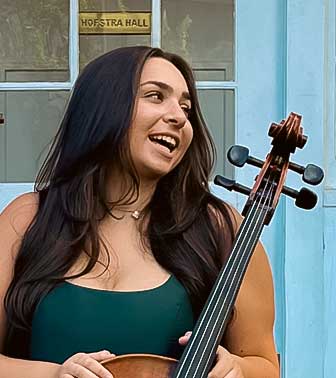
Madeline Dagger
School: School of Education
Major: Music Education
Hometown: Massapequa, New York

Sydra Daniyal
Schools: School of Natural Sciences and Mathematics and the Kalikow School of Government, Public Policy and International Affairs
Majors: Pre-Medical Studies and Philosophy
Hometown: New Hyde Park, New York
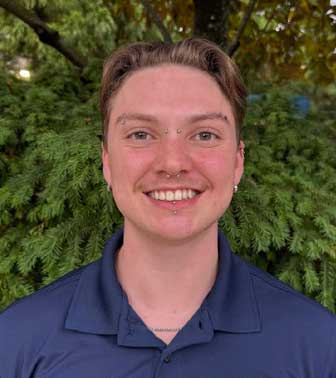
Cade Ferguson
School: Fred DeMatteis School of Engineering and Applied Science
Major: Computer Science and Mathematics
Hometown: Sparta, New Jersey
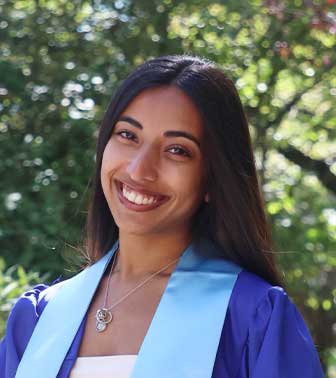
Riana Kamath
School: The Lawrence Herbert School of Communication
Major: Public Relations and Strategic Communication
Hometown: McMurray, Pennsylvania
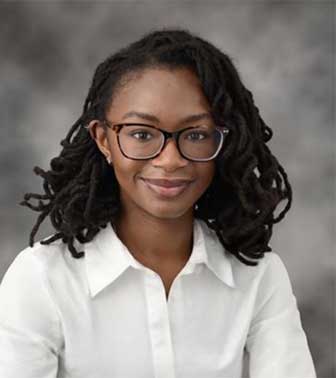
Jessica Myers
School: Hofstra Northwell School of Nursing and Physician Assistant Studies
Major: Nursing
Hometown: Brooklyn, New York
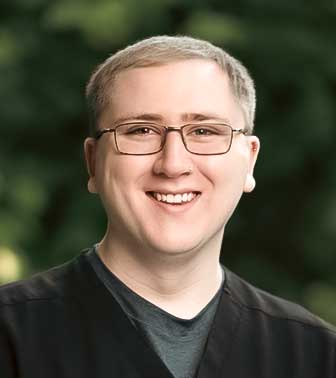
Mason Pfendler
School: Hofstra School of Health Sciences
Major: Audiology
Hometown: Boonville, New York
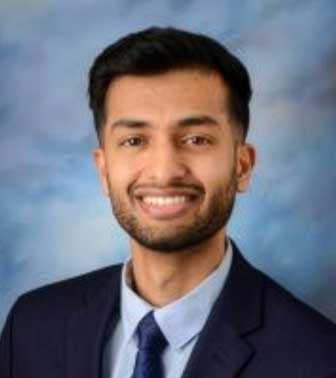
Manav Shah
School: Donald and Barbara Zucker School of Medicine at Hofstra/Northwell
Degree: MD
Hometown: Cupertino, CA

Pallavi Singh
School: School of Humanities, Fine and Performing Arts
Major: English
Hometown: Queens, NY
Mariela Contreras
Q: What did Hofstra offer that you feel you couldn’t find anywhere else?
A: I feel that Hofstra has offered so much, from opportunities to meet and work with incredible professors to access to New York City through the shuttle bus. But the most meaningful thing Hofstra gave me is a sense of community.
As someone who left my home state and family, I was nervous about coming to a place where I didn’t know anyone. Within my first year, I knew I had made the right decision. Through club events, school socials, and RA programs, I built meaningful connections that have continued to grow over the years. Hofstra truly became a second home for me.
Q: What are your plans after graduation?
A: I was accepted into the University of North Carolina at Greensboro’s genetic counseling program, where I will pursue my master’s degree in genetic counseling. After New York, I’ll be heading to North Carolina!
I would not have been able to achieve this goal without the support of my family, mentors, and the opportunities Hofstra provided me.
Q: Who were your mentors, and what made them special to you?
A: There have been so many people who supported me throughout my college journey and opened doors for me. One of my mentors, Dr. Meshack Achore, assistant professor of population health, gave me the opportunity to be a part of his research on maternal mortality rates in Ghana. He guided me through writing a manuscript while also encouraging me to develop my own voice in research and writing.
Another mentor who had a tremendous impact on me is Dr. Matthew Fisher, assistant professor of biology. He gave me my first in-lab research opportunity and supported me throughout the graduate school application process. From providing feedback on my personal statement to even wearing a mustache during mock interviews, he made the process both meaningful and memorable. I truly don’t know if I would have achieved what I have without his guidance.
I am incredibly grateful for such supportive mentors.
Q: Tell me about any research projects, internships, or study abroad programs you participated in or anything special you have done while at Hofstra.
A: I conducted research with Dr. Achore, studying maternal mortality rates in Ghana by examining autonomy and health service utilization among married women. I also worked in Dr. Fisher’s lab, where we over expressed TINAGL1 in head and neck squamous cell carcinoma and
studied its effects on chemotherapy treatment. Both projects are currently in the process of publication.
I also interned at a federally qualified healthcare center, Harmony Healthcare. That experience allowed me to connect with so many amazing people and opened my eyes to the impact of patient care. When you take the time to talk to people, you learn so much, and that’s what I love most about this field.
In addition, I work at Hofstra’s [Diane Lindner-Goldberg] Child Care Institute and also serve as a biochemistry tutor.
Q: What is your favorite memory from your time at Hofstra?
A: This is a difficult question, but one of my favorite memories is staying up until 4 a.m. with a friend studying for our biochemistry final in Hammer Lab. We got McDonald’s and studied together until the sun started to rise.
It may seem like a small moment, but when I think about what college has meant to me, it’s memories like this. Being with friends, supporting each other, and finding joy even during stressful times is what made my experience so special.
We all ended up with an A in the class.
Q: What will you miss the most?
A: As cliché as it sounds, I will miss little moments the most. Being able to ask my friends, “Hey do you want to go get food at the Stu?” or “Let’s go study in the library,” is something I won’t be able to do anymore.
I’ll miss those everyday experiences with my friends, as well as simple things like
walking around campus, seeing the tulips blossom in the spring, or looking out my dorm window at the city lights.
Madeline Dagger
Q. What did Hofstra offer that you feel you couldn’t get anywhere else?
A. One of the things I value most about Hofstra University’s music education program is the opportunity it gave me to grow not only as a cellist in the orchestra program but also as an active member of the choir program. Many music education programs tend to place students into a single track (in my case, orchestra), but at Hofstra, I was encouraged to explore multiple areas of music. Because of this, I am graduating as a well-rounded musician and music educator, with experience both as an orchestral performer and as a choral singer. Through the choir program, I had the opportunity to perform at the beautiful Cathedral of the Incarnation in Garden City and go on tour with the Chamber Choir!
Q. What are your plans after graduation?
A. After graduation, I hope to land a full-time position teaching orchestra on Long Island! Through Hofstra’s chapters of NAfME (National Association for Music Education), ASTA (American String Teachers Association), ACDA (American Choral Directors Association), NYSBDA (New York State Band Directors Association), and JEN (Jazz Education Network), I have been able to make professional connections, go to conferences, and attend professional development workshops. These experiences have allowed me to feel well prepared for student teaching and the job application process, and to take the next steps in my career as a music educator.
Q. Who were your mentors and what made them special to you?
A. One of my biggest mentors during my time at Hofstra has been my private cello instructor, Professor Deborah Sepe. Under her guidance, I performed three recitals, was featured alongside the American Chamber Ensemble, performed a concerto with the Hofstra Orchestras, and more. She shaped me into a better cellist and also a better educator. She has an amazing pedagogical approach to teaching cello, and I hope to pass along her ideas and methods to my future students.
Furthermore, Dr. Philip Stoecker, Adam Glaser, Kelly Grace, Dr. David Fryling, Pat Newberg, and all of the Hofstra Music faculty have fostered such a beautiful environment and family in Hofstra’s Music Department. I could not have asked for a better group of mentors!
Q. Have you participated in any research projects, internships, or study abroad programs during your time at Hofstra?
A. During my final semester at Hofstra University, I had the opportunity to complete my student teaching and work directly in the field. This experience has been nothing short of amazing and has confirmed how passionate I am about becoming an orchestra teacher. I worked with both 5th- and 6th-grade orchestra students and 9th- through 12th-grade orchestra students. This allowed me to experience a wide range of teaching styles, rehearsal techniques, and student abilities. I’ve loved exploring orchestral music with young musicians, helping students grow as performers, and having the opportunity to conduct during concerts and rehearsals. Working with these students has made me even more excited for the future and the career ahead of me!
Q. What is your favorite Hofstra memory?
A. One of my favorite memories from Hofstra University was during my junior year when I was awarded the Rhoda Pinsley Levin Award for Excellence in Music Performance. Receiving this award gave me the opportunity to present a solo cello recital in April 2025, which became one of the most meaningful experiences of my college career. Preparing for the recital pushed me to think outside the box musically and challenged me to elevate both my technique and repertoire to a new level. More than anything, the performance felt incredibly special because it represented a culmination of everything I had been working toward throughout my academic journey, and it was a moment that meant a great deal to both my family and me.
Q. What will you miss the most about Hofstra?
A. What I will miss most is the incredible sense of community I’ve found here. Throughout my time at Hofstra, I’ve been fortunate to build so many meaningful connections both within and outside of the Music Department. I have lived with amazing housemates involved in the dance program and Danceworks, and it has been so rewarding not only to watch them shine on stage but also to have them come support me at my performances.
Within the Music Department, I’ve made lifelong friendships with people who share the same passion for music, teaching, and performance. From weekly rehearsals to concert nights, I truly could not have asked for a better group of people to collaborate and create music with!
Sydra Daniyal
Q. What did Hofstra offer that you feel you couldn’t get anywhere else?
Hofstra is truly what you make of it. If you invest in the experience, the University gives back tenfold. During my time here, I not only met some of my closest friends, but I also expanded my horizons in ways I never expected. Hofstra gave me the freedom to explore my interests – I changed my major three times before finding the path that felt right for me. That flexibility and encouragement to grow made all the difference.
Q. Who were your mentors and what made them special to you?
I have been fortunate to find incredible mentors across several academic departments, including Dr. Michael Dores (Biology), Dr. Scott Lefurgy (Chemistry), and Dr. Terry Godlove (https://www.hofstra.edu/philosophy).
Dr. Dores introduced me to the world of scientific research. His guidance gave me the skills and the confidence to work in the lab and contribute to published research. His passion was inspiring and showed me what I was capable of achieving.
Dr. Lefurgy expanded my perspective beyond medicine. Through his teaching and personal insights, he helped me see that medicine can be the beginning of many different paths. His ability to make complex concepts accessible not only helped me succeed in biochemistry but also inspired my interest in academia.
Dr. Godlove played a pivotal role in shaping my academic journey. Through his classes, I discovered philosophy – particularly ethics – and found a way to connect it with my interest in medicine. His mentorship encouraged me to step outside my comfort zone and explore new intellectual paths, ultimately leading me to bioethics.
Q. What are your plans after graduation?
I am excited to attend the Lewis Katz School of Medicine at Temple University this fall, with plans to eventually pursue a PhD in bioethics. I’m incredibly grateful to the mentors who helped guide me to this path.
Q. What kind of research or special projects have you participated in?
During my time at Hofstra, I had the opportunity to work across a range of research areas. I contributed to projects on maternal and neonatal mortality in Ghana, ultra-processed foods and microplastics, and national DEI attitudes. I also conducted cancer research in collaboration with the New York Institute of Technology College of Osteopathic Medicine (NYITCOM) and worked on a study focused on domestic violence.
In addition, I served as a research assistant in Hofstra’s School of Health Sciences, was a judge at the Long Island High School Ethics Bowl at Hofstra, was on the leadership board of the Hofstra University Model United Nations Conference, founded Hofstra’s chapter of the American Medical Women’s Association, and organized NARCAN opioid overdose prevention trainings. Through these experiences I grew academically and personally.
Q. What will you miss the most about Hofstra?
What I will miss most is the sense of community. From late nights studying and laughing with friends to time spent in the Quad, everyday moments became the most meaningful. I’ll miss the little things – the cherry blossoms, the koi pond, and the energy of campus. Above all, I’ll miss the people who made Hofstra feel like home. I’m incredibly grateful for the memories and the foundation this experience has given me.
Cade Ferguson
Q: What did Hofstra offer that you feel you couldn’t find anywhere else?
A: The tight-knit community of faculty and students was so meaningful to me. My professors have been invested in my success since day one, and their dedication to staying relevant and providing a truly comprehensive education consistent with industry’s evolving standards is admirable.
Q: What are your plans after graduation?
A: I will begin my PhD in Biostatistics at the University of North Carolina, Chapel Hill, in the fall.
Q: Who were your mentors, and what made them special to you?
A: Among the many incredible faculty members who guided my undergraduate journey, I have to acknowledge Dr. Gretchen Ostheimer and Dr. Johanna Franklin. Dr. Ostheimer was hugely influential in my decision to pursue advanced study of mathematics, and I’m extremely grateful for her support over the past four years. Dr. Franklin, my professor and thesis advisor, has also made a monumental impact on my growth as a mathematician and researcher. Dr. Franklin’s guidance has shaped the way I approach complex problems, and her support has empowered me as I enter the field of biostatistics.
Q: Tell me about any research projects, internships, or study abroad programs you participated in or anything special you have done while at Hofstra.
A: The DeMatteis School’s ASPiRe program was pivotal in the shaping of my postgraduate goals. I had my first research experience in the summer of 2024, where I conducted a literature review of tournament design and ranking procedures in theoretical computer science. Last summer, I had the opportunity to participate in ASPiRe again, where I worked in the Human Brain Mapping Laboratory at Northwell Health’s Feinstein Institutes for Medical Research. There, I gained invaluable research experience and developed a passion for applying my background in computer science and mathematics to the fields of medicine and healthcare.
I was also fortunate to participate in the Health Works Co-op affiliated with Hofstra’s School of Health Sciences. The co-op with Northwell Health’s Corporate Finance Department gave me real industry experience, and I’m extremely grateful for the skills and perspective I gained.
Q: What is your favorite memory from your time at Hofstra?
A: My favorite memories come from singing with my a cappella group, Sigma’cappella, starting freshman year.
Q: What will you miss the most?
A: I will miss being on campus and having the ability to stop at a professor’s office for a chat or spend an evening in the math lounge with my classmates.
Riana Kamath
Q. What has most impressed you about Hofstra?
A. I have always been impressed by the strength of Hofstra’s alumni network. Since my first year, I’ve been able to build meaningful connections with Hofstra graduates working in public relations. With their guidance, I’ve been able to learn about the industry and develop strong professional connections. As president of Hofstra’s chapter of the Public Relations Student Society of America [PRSSA], I have invited many alumni back to campus to speak and offer advice to PR majors. These relationships helped me grow professionally and introduced me to mentors and unique networking opportunities.
Q. What are your plans after graduation?
After graduating in May, I will begin working full time as an account coordinator at HUNTER on the Amazon [global shopping events] tentpole team. I began at the agency as a social media intern in June 2025 and joined this account in September. This internship allowed me to establish a strong foundation with the agency and ultimately led to a full-time offer.
Q. Who were your mentors and what made them special to you?
A. One of my most influential mentors has been Professor Jeffrey Morosoff, my internship advisor, the PRSSA faculty advisor, and someone I have regularly gone to for guidance on career and personal decisions. His support truly shaped my college experience, and I would not be where I am today without him.
Another important mentor has been Cassie Ankener, a Hofstra alumna and former PRSSA president. She inspired me to join PRSSA, and the experience of being a member and later serving as president changed the trajectory of my time at Hofstra.
Outside of Hofstra, Ali Kaplan, my first manager at HUNTER, showed me what building a career after college can look like. I continue to turn to her for advice and share updates as I navigate new opportunities.
Q. Have you completed any research projects, internships, or study abroad programs while at Hofstra?
A. In addition to HUNTER, I completed internships at two other public relations agencies. At ZE Creative Communications, I worked with clients in the nonprofit, municipal, and education sectors. I also worked in the sports and entertainment department at JONESWORKS, where I assisted in media monitoring for high-profile athletes, such as Novak Djokovic, Venus Williams, Tom Brady, Russell Wilson, and Caleb Williams.
I traveled abroad during the winter of 2024 with the Hofstra in Greece program. Fully immersing myself in Greek culture while experiencing the rich history and beauty of the country was incredibly impactful. I highly recommend studying abroad before graduating. It is a unique opportunity for both personal growth and cultural exploration.
Additionally, I worked with Hofstra’s Office for Development and Alumni Affairs for three years as part of the Call with Pride team. Connecting on a regular basis with Hofstra graduates allowed me to learn and appreciate their stories while building my professional relations and communication skills.
Q. What is your favorite memory from Hofstra?
A. Joining Delta Gamma in the spring of 2023 is my favorite memory. Through the sorority, I’ve made lifelong friends, formed a deep bond with the University, and have been part of philanthropic efforts to support Service for Sight, an organization that supports blind and visually impaired people through fundraising, grants, and volunteer work.
Q. What will you miss the most about Hofstra?
A. I know I’ll miss its beauty. In winter, the campus looks like a postcard, and in the warmer months, I love walking around with friends, taking in the flowers, and exploring different spots. One of my favorite views has always been from the 10th floor of the library, overlooking the Manhattan skyline.
I’ll especially miss The Lawrence Herbert School of Communication, a place bustling with energy, passion, and creativity. Whether it’s the excitement on the first floor during a live show or the constant collaboration happening in the content suite, the building always feels alive. Being surrounded by other driven students, friends, and the PRSSA community has made my Hofstra experience so special.
Jessica Myers
Q: What did Hofstra offer that you feel you couldn’t find anywhere else?
A: Hofstra’s undergraduate nursing program immersed me in the field from the very beginning. Being affiliated with Northwell Health also helped me build strong connections with hospitals across Long Island.
During our final semester, we complete a capstone that includes 225 hours of in-hospital experience in a specialty of our choice, which is more than many other programs. This gave me the opportunity to build meaningful relationships with staff, provide direct patient care, and truly understand what it feels like to work as a nurse in my chosen field.
This semester, I completed 18, 12.5-hour shifts on a psychiatric telemetry unit. I learned so much about time management, my scope of practice, and how to collaborate with an interdisciplinary team.
Q: What are your plans after graduation?
A: After graduation, I am excited to begin my career as a psychiatric nurse. I hope to care for patients with both behavioral health and medical needs, whether in an inpatient psychiatric medical unit or a psychiatric emergency room.
It is also a goal of mine to become a SANE/SAFE nurse, provide trauma-informed care, and conduct sexual assault exams. I am passionate about supporting patients during some of their most vulnerable moments and advocating for their safety and dignity.
In the long term, I plan to return to school to become a psychiatric mental health nurse practitioner.
Q: Who were your mentors, and what made them special to you?
A: Throughout my time at Hofstra, I have been supported by my friends, family, professors, and the community I found through Intervarsity Christian Fellowship. What made them so special was their constant encouragement and belief in me, pushing me to grow and excel in everything I do.
Q: Tell me about any research projects, internships, or study abroad programs you participated in or anything special you have done while at Hofstra.
A: I worked as a summer nurse extern at Northwell Health’s Zucker Hillside Hospital. Receiving this role as a junior nursing student helped confirm that psychiatric nursing is the field I want to pursue. During this experience, I was honored as Nurse Extern of the Summer.
More importantly, I built meaningful relationships and had the opportunity to support patients during some of their most vulnerable moments, witnessing their strength and recovery. Working in psychiatric care gave me a new perspective on treating the whole person.
These lessons also carried into my role as a senior resident assistant, where I supported students through their own challenges and transitions. My clinical experiences have shown me that everyone faces emotional and psychological challenges at different points in life. This perspective has shaped my approach to nursing, allowing me to provide empathetic, individualized care across all patient populations.
Q: What is your favorite memory from your time at Hofstra?
A: One of my favorite memories was stepping outside of my comfort zone and leading a Black Campus Ministry through InterVarsity. After attending a retreat and learning about the Black ministries on other campuses, I felt inspired to create that space at Hofstra.
The following semester, I started a Black student Bible study, and it became one of the most meaningful experiences of my college journey. Each week, we came together for fellowship, conversation, and community. Through this experience, I connected with people from different backgrounds across the diaspora while being united through our shared faith.
Q: What will you miss the most?
A: I will miss the small traditions that made Hofstra feel like home, including Fall Fest, Music Fest, build-a-pet events, late-night breakfasts, and the tulips blooming around campus.
Most importantly, I will miss my favorite campus dining staff member, Ms. Karla. She felt like a mother figure to so many of us, especially being away from home. She listened to our stories and watched us grow from first-year students into graduating seniors. I will never forget her.
Mason Pfendler
Q: What did Hofstra offer that you feel you couldn’t find anywhere else?
A: Hofstra gave me a home away from home and a well-rounded education. I started college unsure of what I wanted to do, but with the variety of degree programs and opportunities available, it was easy to find my own path. Being so close to New York City was an added bonus and made the experience even more special.
Q: What are your plans after graduation?
A: I am currently seeking full-time employment for an audiologist role.
Q: Who were your mentors, and what made them special to you? A: Two of my biggest supporters were Susan DeMetropolis, associate professor of speech, language, hearing sciences, and Liliana Hinojos Madrid, associate director of resident success.
Dr. DeMetropolis was one of my first professors after I switched my major to speech-language-hearing sciences. Even though I was the only student in my class pursuing audiology instead of speech-language pathology, she made sure I never felt alone in my goals. She took the time to incorporate audiology-related applications into her teaching, which helped keep me motivated and engaged.
Liliana Hinojos Madrid, or Lili, was my manager during my time as a student coordinator in the Resident Success Program. She always made herself available, whether I needed guidance or just someone to talk to. She helped me feel supported and empowered, especially during times when things weren’t going my way.
I truly can’t imagine my Hofstra experience without their support.
Q: Tell me about any research projects, internships, or study abroad programs you participated in or anything special you have done while at Hofstra.
A: During my sophomore year, I participated in the Disney College Program while also conducting a research project on accessibility for deaf and hard of hearing individuals, comparing small and large businesses.
During my graduate studies at Hofstra, I completed three clinical rotations in audiology, including at two fast-paced otolaryngology (ENT) offices and the St. Albans VA Medical Center.
I also worked on campus for five years as a student coordinator in the Resident Success Program (formerly known as the Resident Safety Program).
Q: What is your favorite memory from your time at Hofstra?
A: One of my favorite memories was the opening of the full-service Starbucks in the Student Center.
Q: What will you miss the most?
A: I will miss the late-night walks and talks with friends, spontaneous pizza runs to the Student Center, and trips to the beach and New York City.
I’ll also miss being on campus during the spring and summer, when everything is in full bloom
Manav Shah
Q: What did Hofstra offer that you feel you couldn’t find anywhere else?
A: Being part of the Northwell system was a big reason I was drawn to Hofstra. New York is already saturated with so many health systems, so being able to train in the largest one and have access to all the resources and opportunities that come with that was something I was especially excited about. And that definitely proved true during my time here. I learned from amazing, compassionate physicians, found mentors who really supported me, and got involved in meaningful research in areas I care about. As a 4+4 student, Hofstra also gave me a strong sense of continuity and community. Staying here for medical school meant I could keep close friendships from undergrad while also building new ones. Over the past eight years, I’ve met some of my best friends – people I know I’ll stay connected with for the rest of my life. Hofstra and Northwell are both truly special places.
Q: What are your plans after graduation?
A: I will be starting internal medicine residency at Beth Israel Deaconess Medical Center. Thanks to the Klar Program here at ZSOM, I discovered that I really enjoy quality improvement research, and that’s an area I’m looking to get closely involved with during residency. At the same time, there is so much more I hope to explore at BIDMC, including medical technology, AI in medicine, entrepreneurship, and medical education. After residency, I am currently interested in pursuing a pulmonary/critical care fellowship given my interest in ICU medicine.
Q: Who were your mentors, and what made them special to you?
A: Dr. Suhail Raoof, my PI when I was a clinical research assistant before starting medical school. To this day, his rapport and kindness toward patients are among the best I’ve ever seen, and he has continued to support me even after I left the position. Dr. Leila Tchelebi, my research PI, who has supported me on the same research project over three years of medical school and whom I could go to for advice on anything on my mind. Dr. Matthew Weiss, my Klar mentor, who provided me with both independence and mentorship in starting quality improvement research and working with the Northwell Cancer Institute and showed me how to balance the many areas that medicine offers. Dr. Joanne Willey, my 4+4 program advisor starting as a freshman in undergrad, and for all her mentorship in our medical education research. Dr. Barbara Juliano and Dr. Philip Solomon, my ZSOM family heads. Both are amazing faculty members whom anyone in our family could go to for anything, and who would always support us.
Q: Tell me about any research projects, internships, or study abroad programs you participated in or anything special you have done while at Hofstra.
A: Through the Klar Program at ZSOM, I became interested in quality improvement research. My Klar project involved designing a system-wide enhanced recovery protocol (ERP) that standardized post-operative care for patients undergoing liver cancer surgery. We were able to implement this protocol at LIJ Medical Center and are currently collecting data on its efficacy. That experience led me to work on another QI project with the Department of Radiation Oncology, in which we analyzed 13,000 radiation cases across Northwell to advocate for prospective peer review and improve patient safety.
Q: What is your favorite memory from your time at Hofstra?
A: Playing intramural soccer with other ZSOM students was so much fun. I played soccer growing up, so being able to play again reminded me how much I love it. It was also a great way to meet people outside of the classroom. Best of all, those games ended up being really competitive, which made them even more exciting. As an undergrad, living in the dorms during my first two years and meeting some of my closest friends there is a memory I’ll never forget.
Q: What will you miss the most?
A: It’s cliché, but the people. Having been here for eight years, I feel like the East Coast is now home compared to the West Coast (where I’m originally from). The majority of my friends, including those from back home, are now in New York. My sister recently moved here, and I have extended family in the area as well. As excited as I am to be moving to Boston, I will miss the people the most. I will also miss Hofstra’s campus and the ZSOM building. The campus itself is beautiful and peaceful, and it has great on-campus food spots like Bits and Bytes, which has great burgers. I love the layout of our medical school building and the new, modern feel that it has.
Pallavi Singh
Q. What did Hofstra offer that you feel you couldn’t get anywhere else?
Hofstra gave me more one-on-one support as a student, a writer, and a person. The smaller class sizes allowed me to better connect with peers and professors and form many important friendships.
Q. What are your plans after graduation?
This fall I’ll be entering Queens College’s MFA program in creative writing, further developing my voice and keeping writing at the center of what I do.
Q. Who were your mentors and what made them special to you?
English Professor Beth Ain was instrumental in teaching me the importance of revision and the value of drawing from personal experience in my writing. She and Professor Kelly McMasters encouraged me to pursue an MFA, despite my doubts about being ready. I’m also deeply grateful to Professors Lee Zimmerman and Annabelle Haynes who took the time to guide me through my future options, write recommendation letters, and consistently remind me of my capabilities. I also appreciate the support of Professors Ramiro Campos and Connie Roberts.
Q. What special projects or programs have you participated in?
I served as a student editor on the academic journal Twentieth Century Literature, under the guidance of Professor Zimmerman. I also served as a peer teacher in his class on Food and Literature. I was invited to read and provide feedback on a manuscript by Beth Ain, and that taught me about the process of providing author feedback. Lastly, I worked as a research assistant for Professor Luke Madson in the Department of Comparative Literature, Languages, and Linguistics.
Q. What will you miss the most about Hofstra?
If I had to narrow it down, it would be the office hours I shared with the mentors I mentioned.
Although I’m excited to join another academic and literary community, it’s bittersweet to leave behind the faculty and friends who have been pillars of support.