




STUDENT ACCESS SERVICES
Planning Accessible Events with Hofstra Pride
Accessibility is a shared responsibility at Hofstra University. Planning with accessibility in mind helps create welcoming, inclusive experiences where every member of our community can fully participate.
In accordance with the Americans with Disabilities Act (ADA) and Section 504 of the Rehabilitation Act, event organizers should consider accessibility at every stage of the planning process to help ensure equitable access to programs, services, and activities for students, employees, alumni, guests, and visitors.
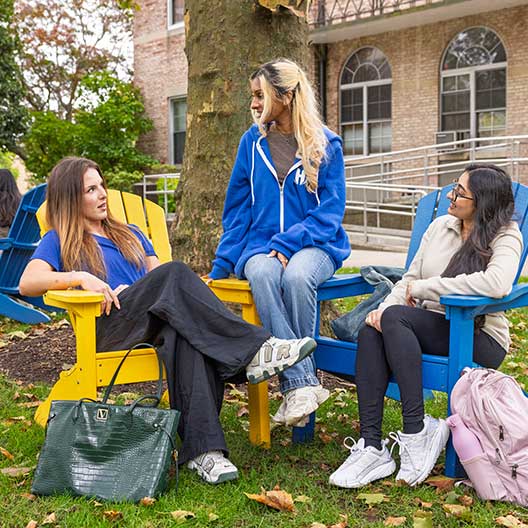
Include an accessibility statement in all event announcements and communications to inform attendees about available accommodations and how to request them.
Hofstra University strives to ensure that all university-sponsored programs and events are accessible and inclusive. Individuals requiring accommodations or specific access to participate are encouraged to contact the event host or the individual listed in the event announcement as early as possible, preferably at least 10 business days before the event.
- ASL Interpreter Booking Request Form for Departmental Events
- CART Services Request Form for Departmental Events
Please note: Costs associated with ASL interpreting and CART services are the responsibility of the sponsoring department, office, or event organizer.
Use this checklist to help plan accessible and inclusive meetings, conferences, lectures, performances, celebrations, and other campus events.
Plan with Pride by ensuring everyone knows your event is welcoming and accessible.
- Include an accessibility statement in all event announcements, registration pages, flyers, emails, websites, and promotional materials.
- Explain how participants can request accommodations.
- Encourage accommodation requests as early as possible, ideally at least 10 business days before the event.
- Ensure websites, registration forms, and electronic communications meet the Web Content Accessibility Guidelines (WCAG) 2.1.
- Provide event information in accessible digital formats whenever possible.
Show your Hofstra Pride by making it easy for everyone to navigate your event.
- Use clear, easy-to-read signage throughout the event venue.
- Clearly identify accessible entrances, parking, elevators, restrooms, and accessible routes using the International Symbol of Accessibility, when appropriate.
- If the primary entrance is not accessible, provide clear directional signage to the accessible entrance.
- Consider tactile and Braille signage when appropriate for the venue and audience.
Create spaces where every participant can engage, connect, and belong.
- Select a venue that is accessible to people with mobility disabilities.
- Ensure accessible routes are available from parking areas, public transportation stops, and building entrances to the event space.
- Provide ramps, lifts, or other accessible means of entry wherever there are changes in elevation, including building entrances, meeting rooms, presentation areas, and stages.
- Confirm elevator access when the event is held on an upper or lower floor.
- Verify that accessible restrooms are located near the event space.
- Keep aisles, walkways, and exits clear of cords, equipment, furniture, and other obstacles.
- Arrange integrated seating so attendees using wheelchairs can sit with companions throughout the venue rather than in a single designated area.
- Ensure registration tables, presentation areas, food service stations, and other event features are accessible.
- Consider the needs of attendees who use mobility devices, service animals, or other assistive technology.
Thoughtful planning helps every guest participate comfortably.
- Offer food options that accommodate a variety of dietary needs and preferences.
- Clearly label food items with ingredients and common allergens whenever possible.
- Allow attendees to request dietary accommodations during registration or when responding to the event invitation.
- Ensure food and beverage service areas are accessible to all participants.
Communication access helps every member of the Pride fully participate.
Depending on the event and participant needs, consider providing:
- American Sign Language (ASL) interpreters.
- Communication Access Realtime Translation (CART) captioning.
- Assistive listening systems, when available.
- Live or automated captions for virtual and hybrid events.
- Audio description or verbal descriptions of important visual content, including images, demonstrations, and videos.
- Alternative formats for printed and digital materials upon request.
Present with Pride by making your content accessible to every participant.
Whether presenting in person or virtually:
- Use a microphone for all presenters, even in smaller venues.
- Ensure audience questions can be heard by everyone by providing a microphone or repeating each question before responding.
- Verbally describe charts, graphs, images, demonstrations, and other visual content.
- Use large, easy-to-read fonts and maintain strong color contrast.
- Do not rely solely on color, animation, or visual cues to communicate important information.
- Describe on-screen actions instead of using directional phrases such as “click here” or “over there.”
- Caption all videos with audio and provide audio descriptions when appropriate.
- Use clear, concise language and avoid unnecessary jargon.
- Offer multiple ways for participants to ask questions during in-person, virtual, and hybrid events.
Share information in formats everyone can use.
- Distribute presentation materials electronically before the event whenever possible.
- Ensure Word documents, PDFs, PowerPoint presentations, and other electronic materials are accessible.
- Provide handouts in alternative formats upon request.
- Consider offering a limited number of large-print copies.
- Share accessible electronic copies of presentation materials after the event, when appropriate.
Plan with Pride
Accessibility is more than a checklist—it’s part of creating the welcoming, inclusive community that defines Hofstra University. By considering accessibility throughout the planning process, event organizers help ensure that students, employees, alumni, guests, and visitors have equitable opportunities to participate, contribute, and succeed.
Plan with Pride. Welcome with Purpose. Include Everyone.